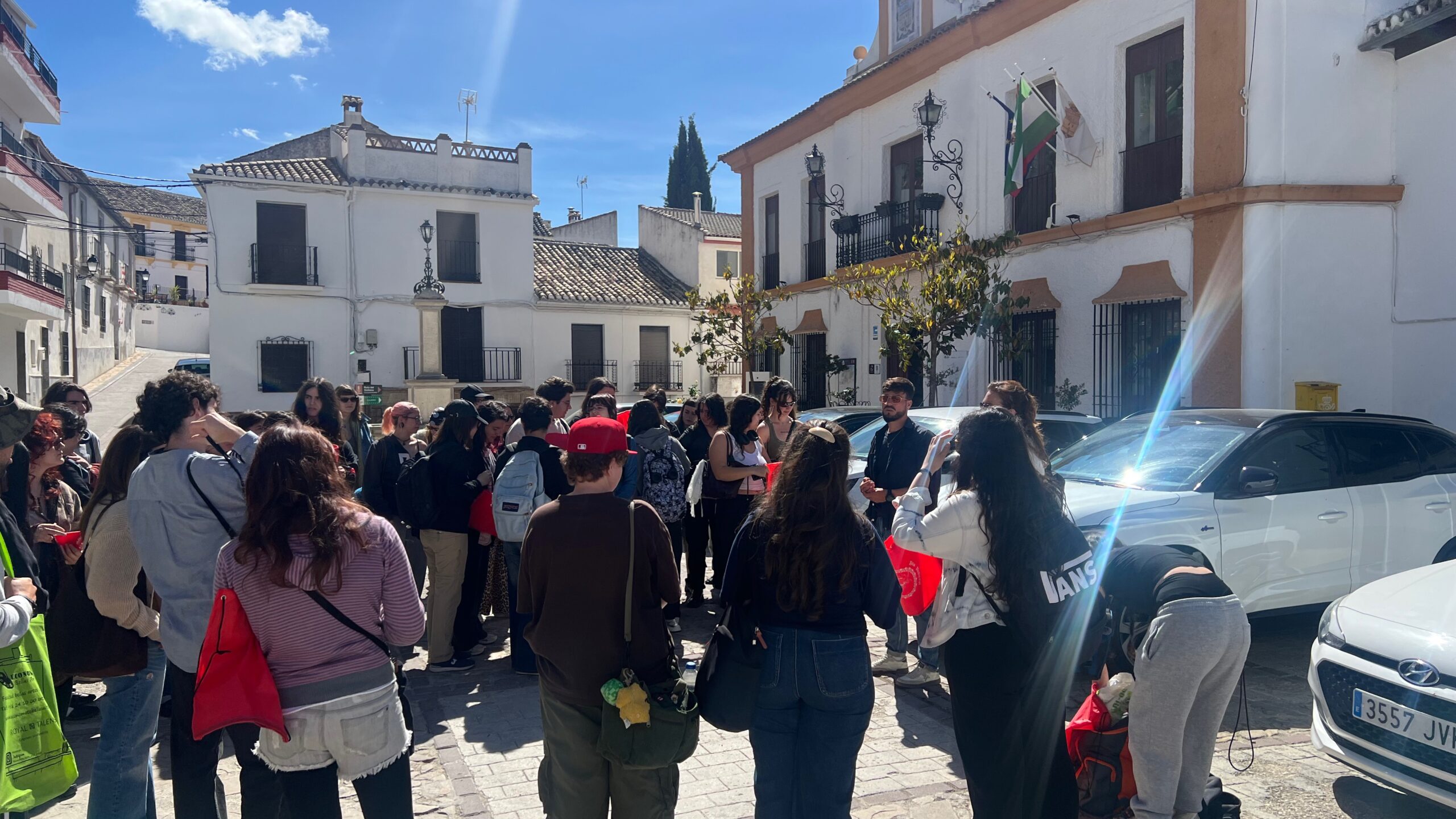
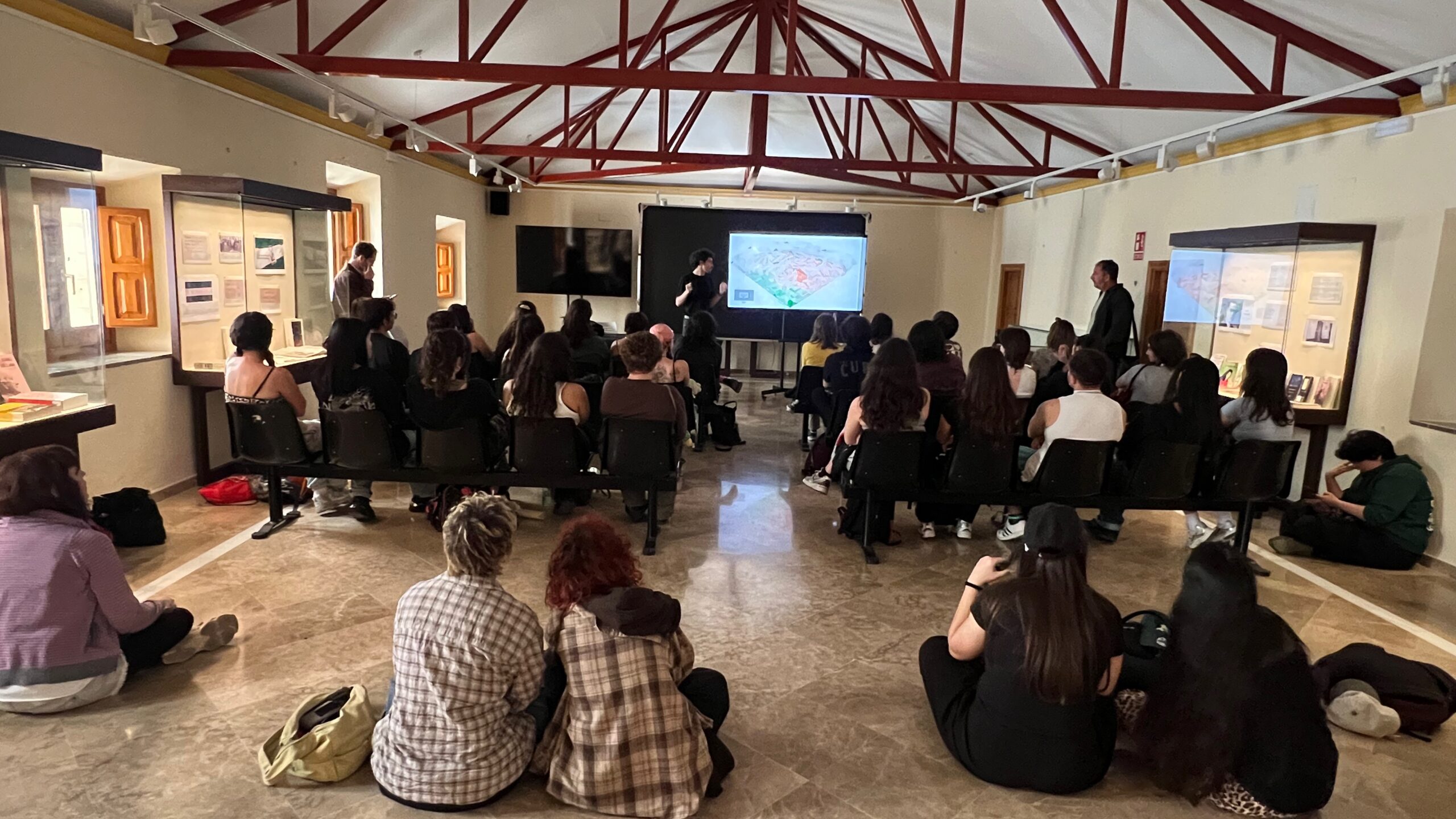
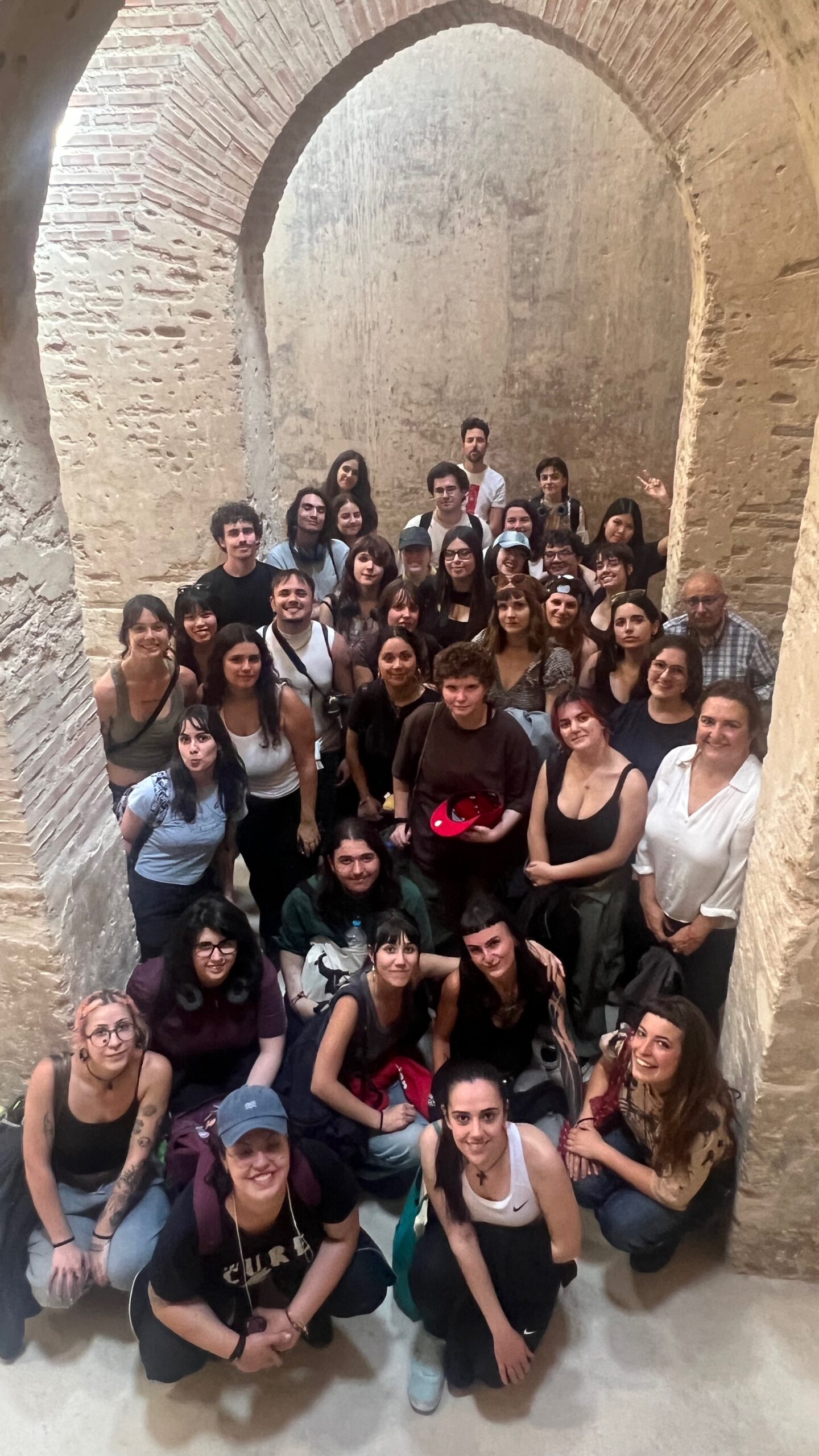
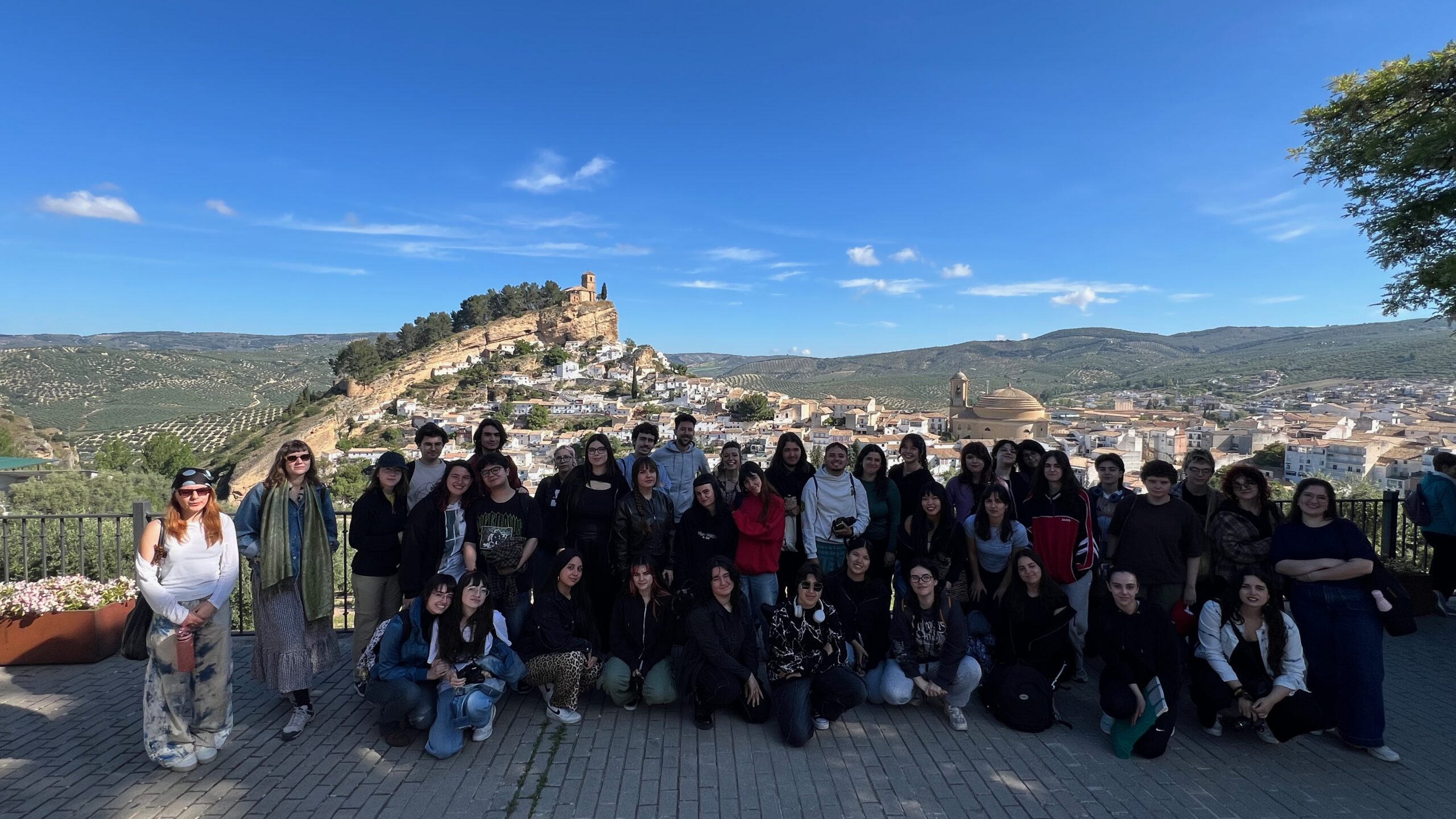
Approximately 35 fourth-year Fine Arts students from the University of Granada took part in a field-based learning and co-creation activity within the course Experimental Drawing, developed in the municipalities of Íllora and Moclín, within the territorial framework of the UGR pilot action La Voz de las Torres.
The activity equipped students with knowledge, methodologies, and practical tools for interpreting, documenting, and communicating cultural heritage through contemporary artistic practices. Prior to and during the field visits, participants were introduced to the historical, environmental, and social characteristics of the territory, including its defensive architecture, rural memory, agricultural landscapes, local materials, demographic challenges, and ongoing processes of transformation.
The programme included the active participation of local representatives and heritage professionals, reinforcing both its educational and participatory dimensions. In Íllora, local guide Juan Peña accompanied the group on an in-depth visit to the Castle of Íllora, providing historical and architectural insights and explaining its role within the wider defensive system of Western Granada. The students were also welcomed by Antonio Caba, Culture Officer at Íllora Town Council, at the Municipal Museum Collection, where they gained further understanding of the area’s archaeological, historical, and cultural heritage.
In Moclín, the group was received by the Mayor of Moclín, who presented the municipality’s cultural heritage and contextualised the town and its castle within the broader historical landscape of the region. These exchanges enabled students to access locally grounded knowledge and to understand heritage not only through academic sources, but also through the perspectives of those directly involved in its management and public interpretation.
Rather than treating heritage as a collection of isolated monuments, the activity encouraged students to approach it as an interconnected cultural system in which tangible, intangible, and natural heritage converge. Through guided routes, direct observation, field notebooks, graphic recording, visual mapping, and contextual documentation, students developed skills in site-based research, critical observation, heritage interpretation, and visual communication.
A strong co-creation dimension was embedded throughout the process. Students were not passive recipients of information, but active contributors who developed their own interpretations of the territory. Knowledge shared by local actors informed their research and visual production, which was grounded in observation, dialogue, and analysis. These processes were translated into drawings, expanded maps, graphic archives, installations, modular systems, and other contemporary artistic outputs.
The territory thus functioned as a shared laboratory for visual research and knowledge exchange. Each participant produced a situated reading of the municipalities, contributing to a plurality of perspectives on landscapes, memories, architectural forms, uses, and transformations. This approach expanded the ways in which local heritage can be represented and communicated beyond conventional tourist or decorative imagery.
The initiative also strengthened the connection between university teaching, local institutions, and the HERIT ADAPT pilot action. The methodology developed within La Voz de las Torres was presented as a practical case study, demonstrating how research-based drawing can support heritage interpretation, educational mediation, and the creation of cultural and tourism-related outputs.
Overall, the activity enhanced students’ capacity to work at the intersection of art, heritage, territory, and sustainability, while fostering collaborative production of new narratives and visual interpretations of Western Granada. At the same time, the involvement of local stakeholders promoted dialogue between the university, municipal institutions, and the territory, reinforcing the project’s co-creative and community-based approach.