What we do

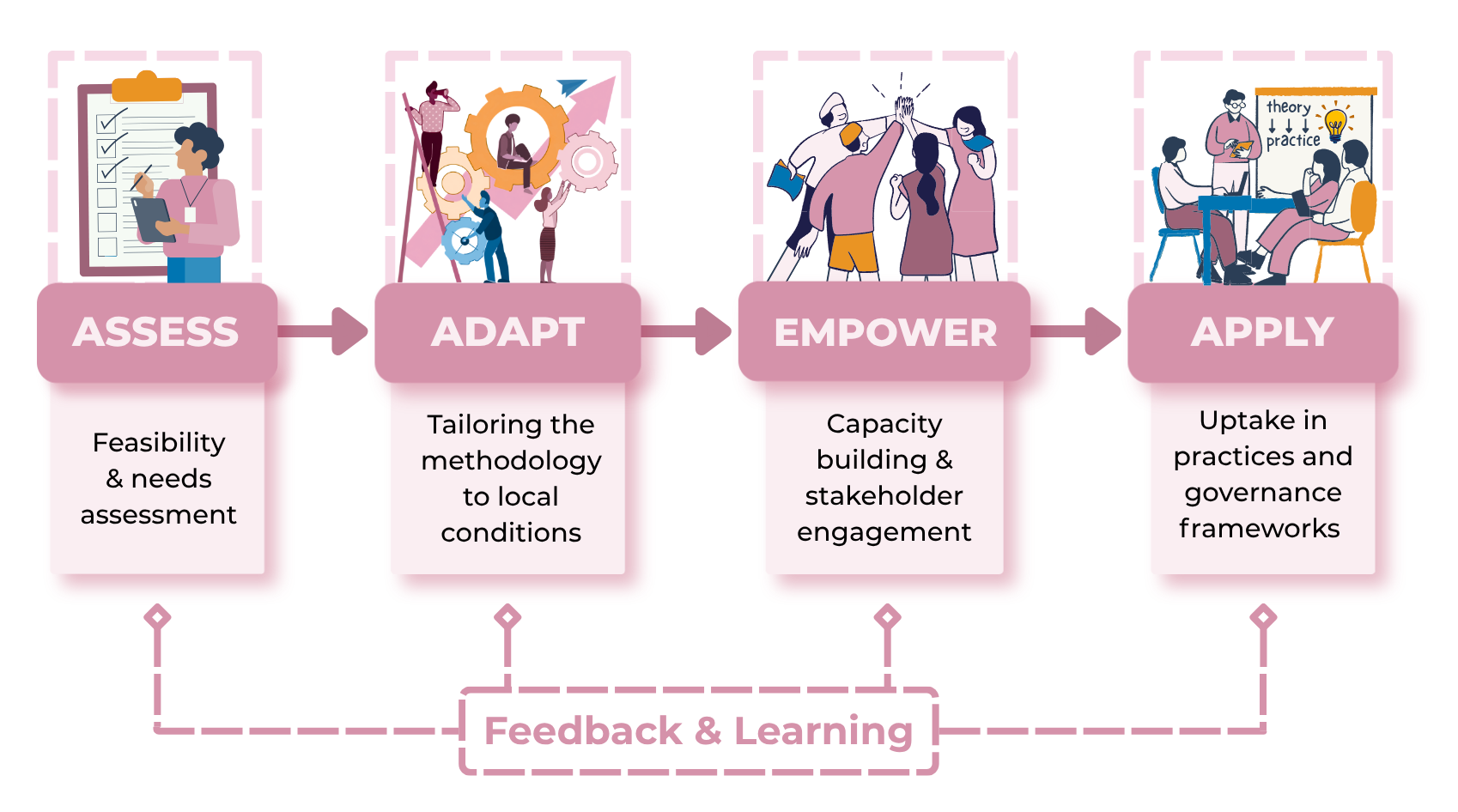
The HERIT ADAPT Sustainable Tourism Model considers territorial needs and visions, existing frameworks and plans and the global technology offer, enabling the use of existing tools and solutions and the valorization of transnational knowledge gained from other projects. Following a co-creation approach HERIT ADAPT truly engages target groups to identify lessons learnt and co-develop Sustainable and Resilient tourism Strategies. Finally, it turns challenges into opportunities by using heritage as a vehicle for communicating cultural and natural heritage assets in the context of climate change and inspires the uptake of HERIT ADAPT innovative solutions from other regions.

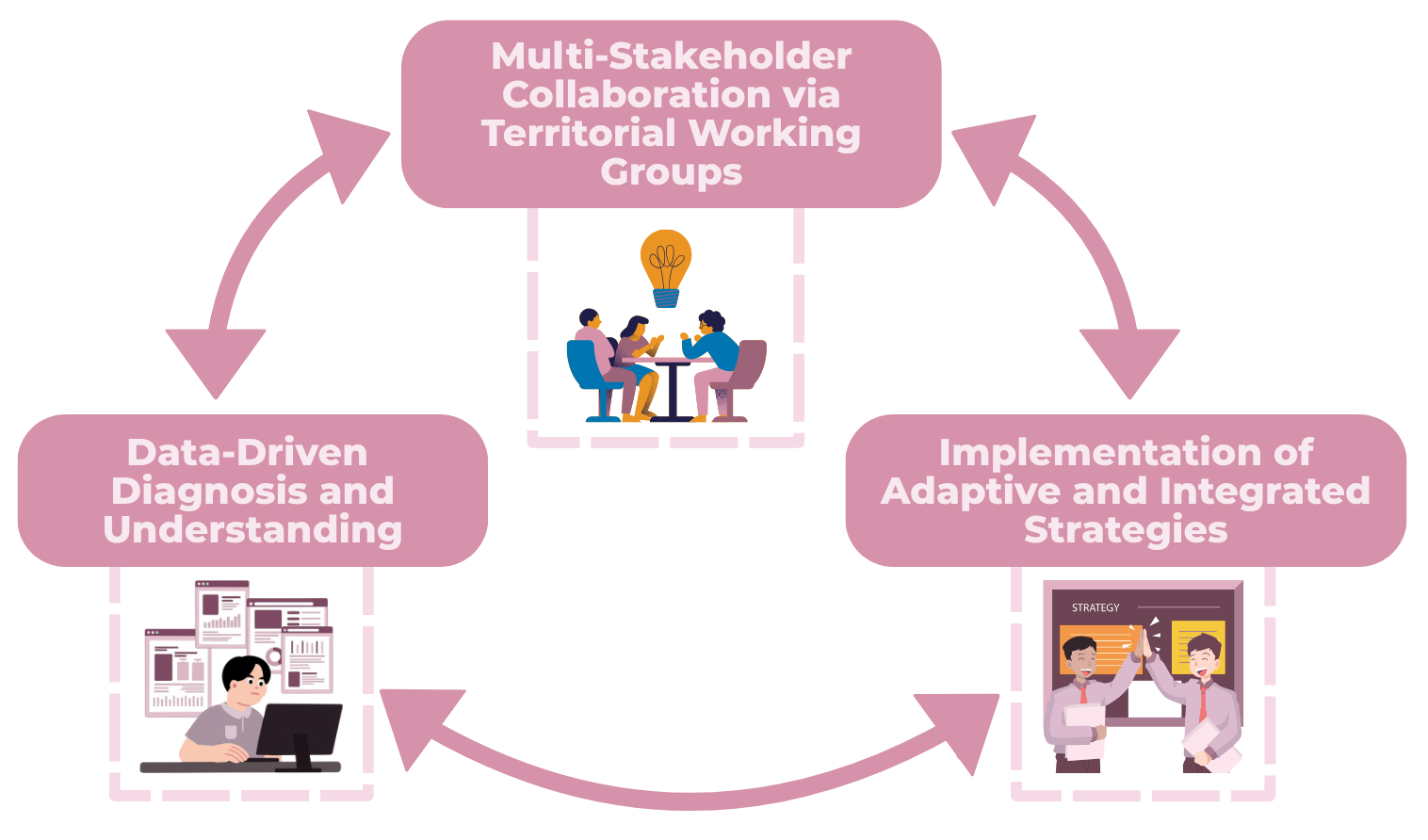
Recognizing tourism as a vital economic driver that must be balanced with preservation, the model offers a practical, actionable pathway, lying in the dynamic interplay of three interconnected pillars, which together form a cyclical process of assessment, collaboration, and adaptive action.

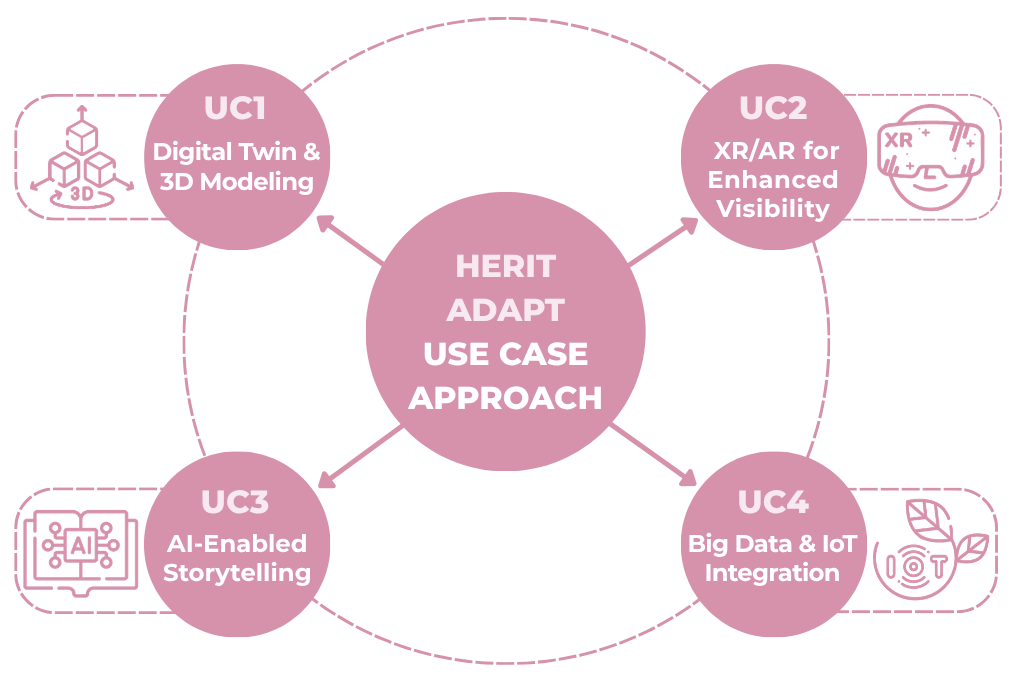
The HERIT ADAPT framework is structured around four complementary Use Cases:

· Use Case 1 – Digital Twin & 3D Modeling
· Use Case 2 – XR/AR for Enhanced Visibility
· Use Case 3 – AI-Enabled Storytelling
· Use Case 4 – Big Data & IoT Integration

Each Use Case represents a functional domain combining data collection, technology, and governance. Together, they enable systematic monitoring and analysis of tourism-related data, forming the operational core of the Sustainable Tourism Model.

Step 1

Methodology for monitoring & management of tourism & climate change related risks in touristic areas 


  • Development of the methodology of risk monitoring and management leading to co-created HERIT ADAPT Sustainable Tourism Model which will facilitate protection of natural and cultural assets and reinforce destinations’ resilience.
  • Awareness raising to inform the general public on the project & engage the addressed Target Groups (TGs), forming Territorial Working Groups.
  • Co-creation activities for defining needs and visions at the pilots’ level, aiming to deliver the HERIT ADAPT Sustainable Tourism Models.

Methodology for monitoring & management of tourism & climate change related risks in touristic areas 


  • Development of the methodology of risk monitoring and management leading to co-created HERIT ADAPT Sustainable Tourism Model which will facilitate protection of natural and cultural assets and reinforce destinations’ resilience.
  • Awareness raising to inform the general public on the project & engage the addressed Target Groups (TGs), forming Territorial Working Groups.
  • Co-creation activities for defining needs and visions at the pilots’ level, aiming to deliver the HERIT ADAPT Sustainable Tourism Models.

Step 2

Sustainable Tourism Model pilot testing


  • Pilot testing of HERIT ADAPT Sustainable Tourism Model in 9 use cases of different typologies combining monitoring and management of risks, and related protection of natural and cultural heritage.

Step 3

Enhancing Tourism Sustainability via HERIT ADAPT Sustainable Tourism Model


  • Enhanced Tourism Sustainability in the partner territories and beyond driven by lessons learnt from the HERIT ADAPT Sustainable Tourism Model testing and relevant knowledge transfer.
  • Engagement and increased awareness of the territory tourism Quadruple Helix related to tourism risks and their mitigation/ adaptation needs.
  • Main target audience are policy makers at regional and local level, as well as territory heritage managers that can integrate the lessons learnt from the pilot testing of HERIT ADAPT Sustainable Tourism Model in their processes and systems. Main means are high-level events and workshops.

Enhancing Tourism Sustainability via HERIT ADAPT Sustainable Tourism Model


  • Enhanced Tourism Sustainability in the partner territories and beyond driven by lessons learnt from the HERIT ADAPT Sustainable Tourism Model testing and relevant knowledge transfer.
  • Engagement and increased awareness of the territory tourism Quadruple Helix related to tourism risks and their mitigation/ adaptation needs.
  • Main target audience are policy makers at regional and local level, as well as territory heritage managers that can integrate the lessons learnt from the pilot testing of HERIT ADAPT Sustainable Tourism Model in their processes and systems. Main means are high-level events and workshops.