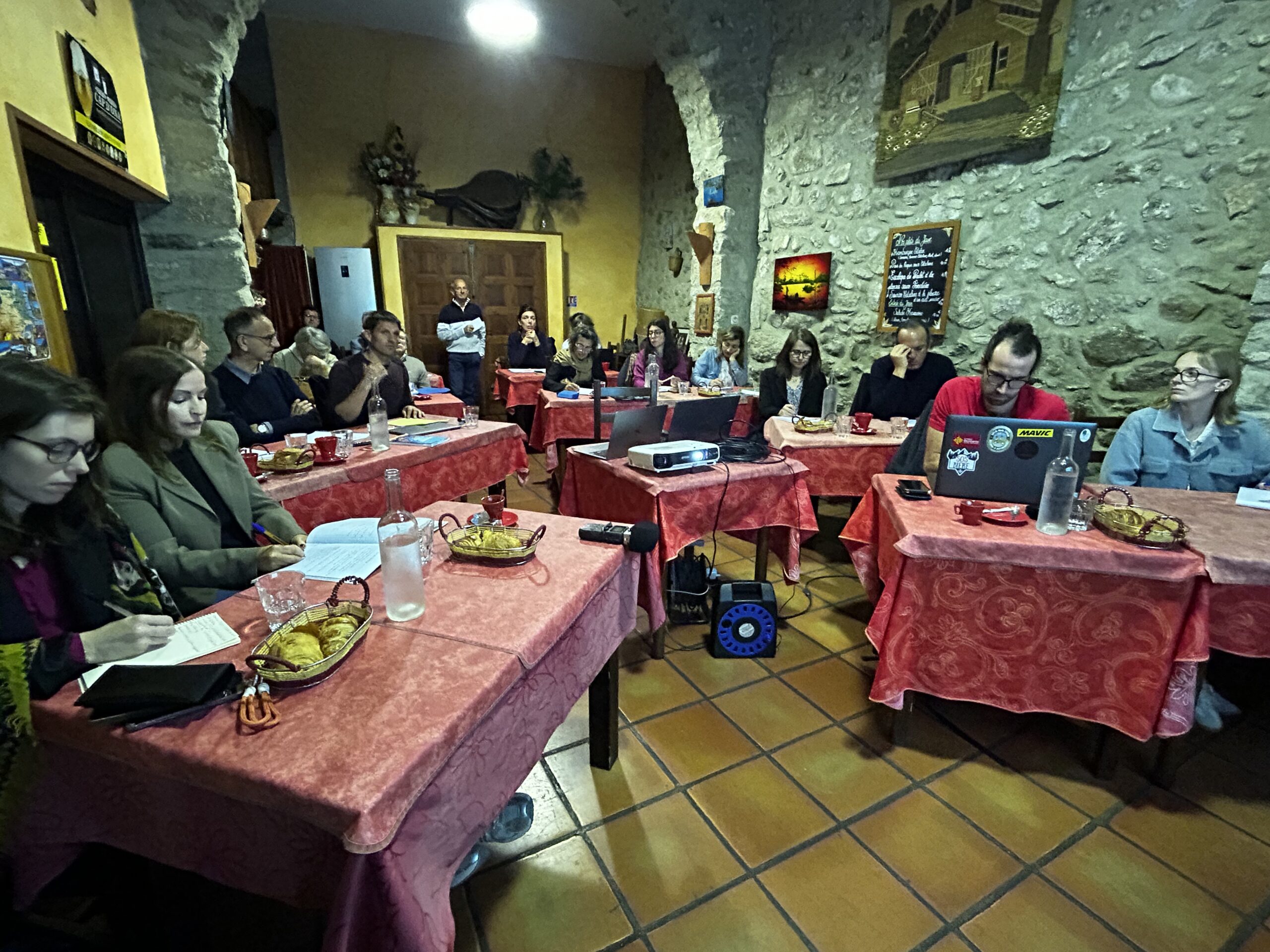
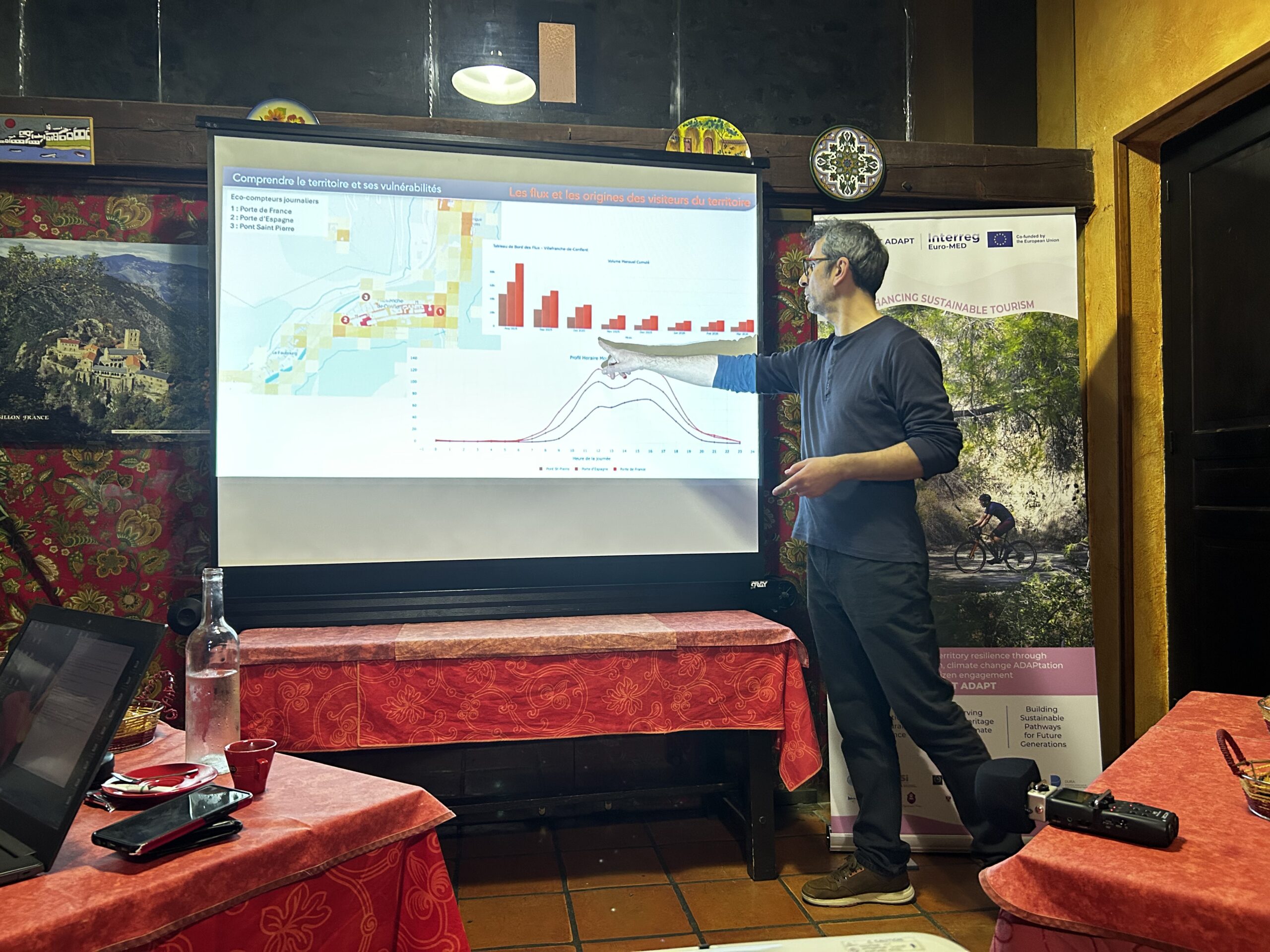
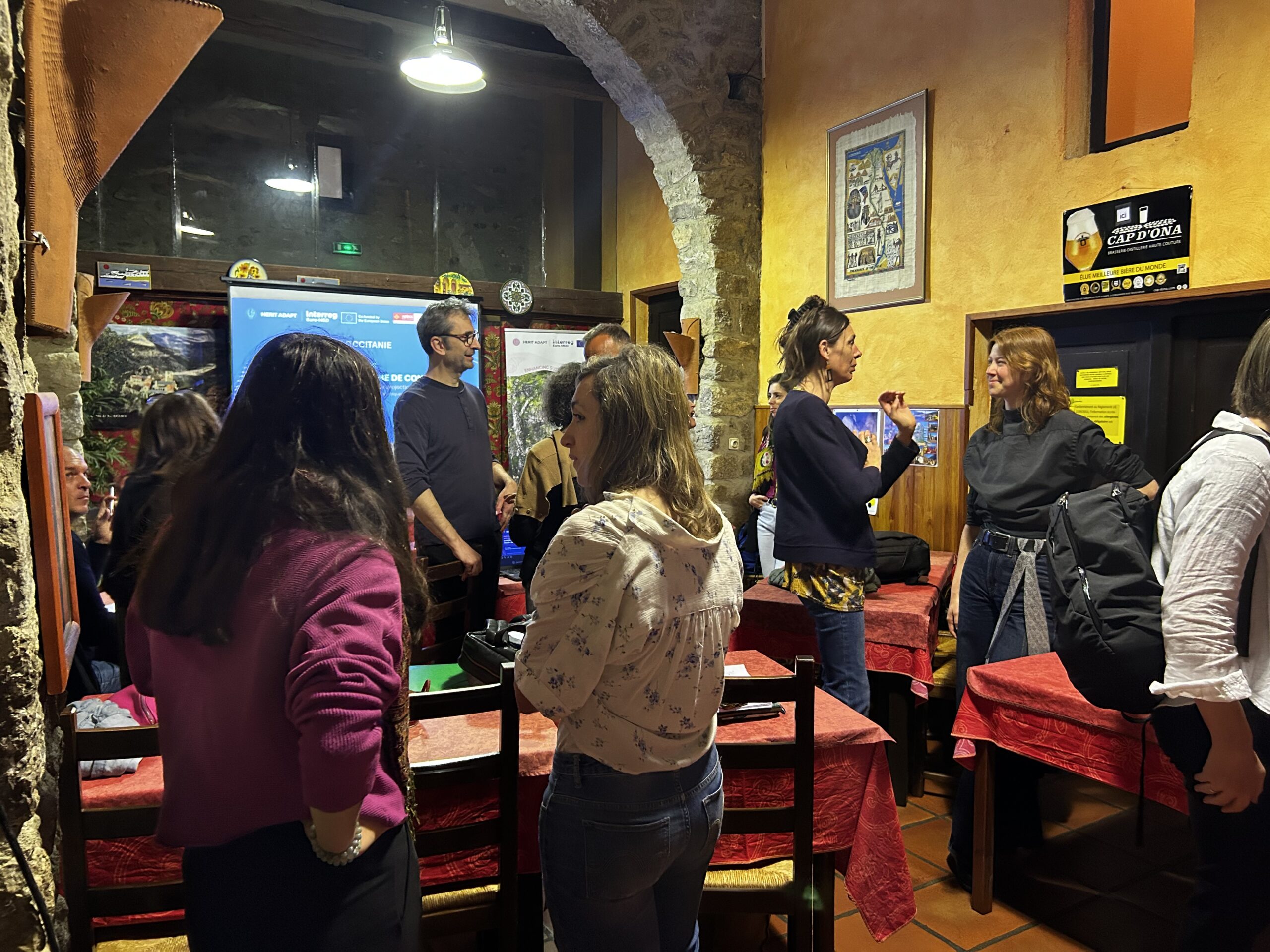
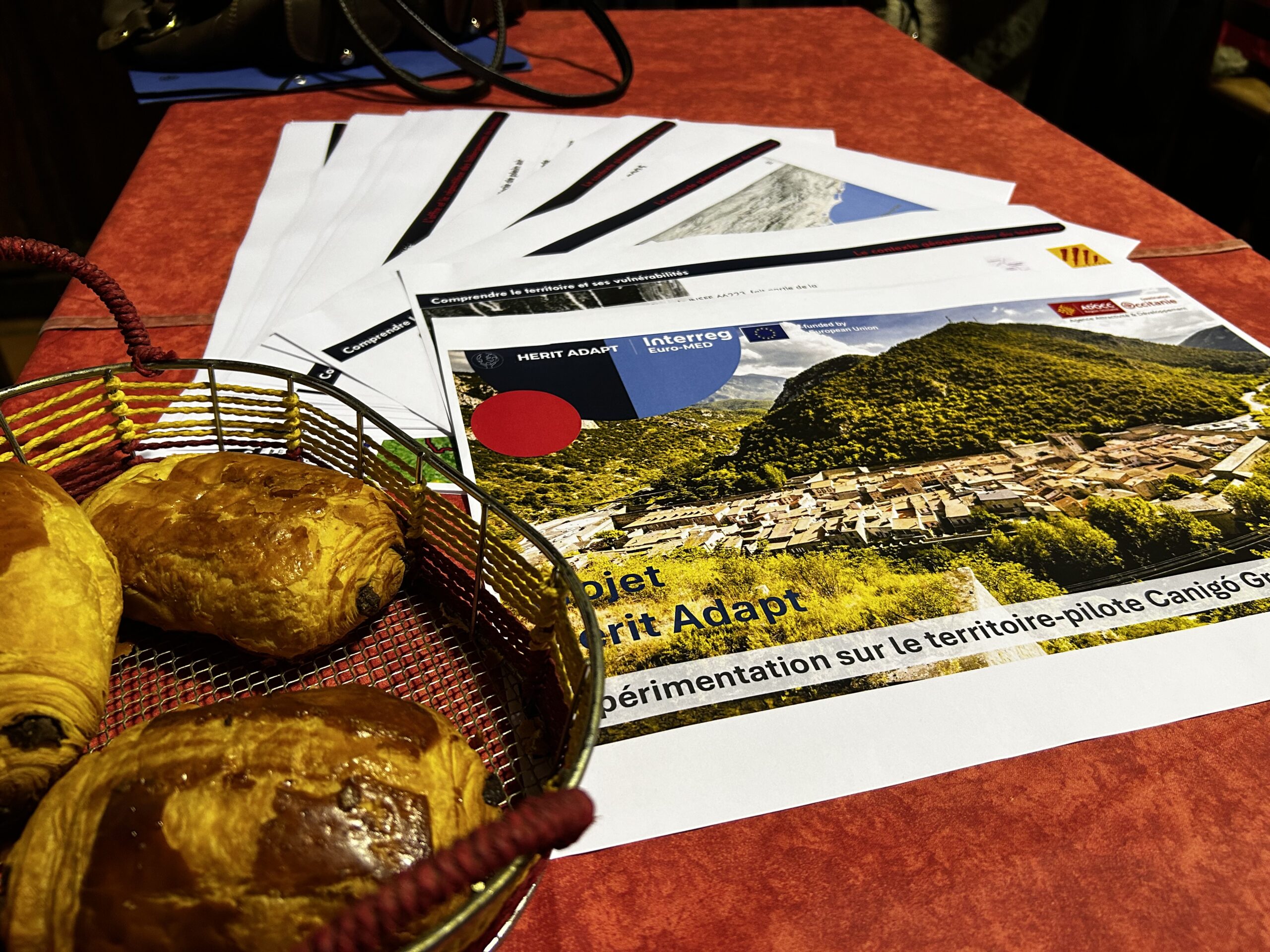
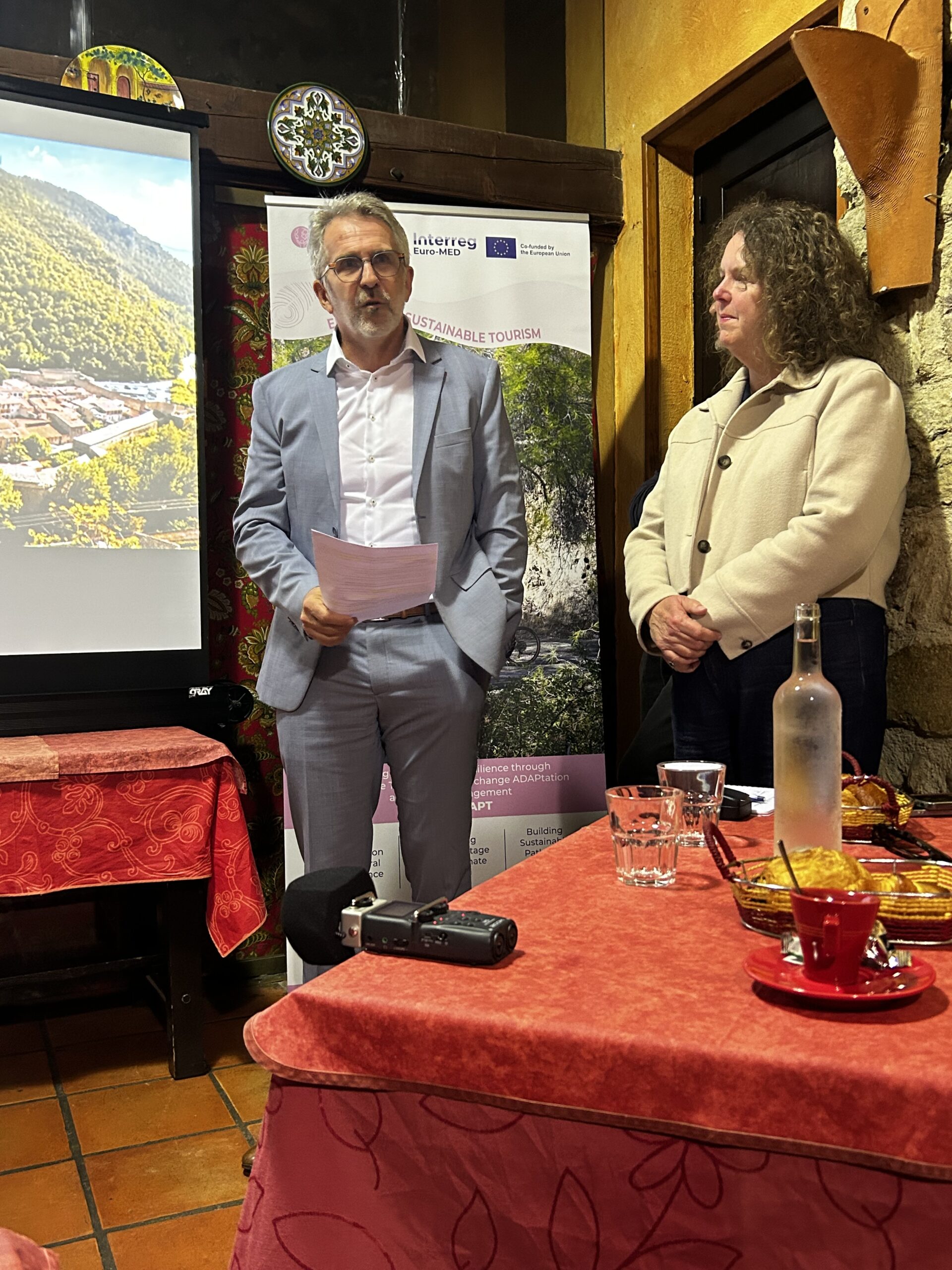
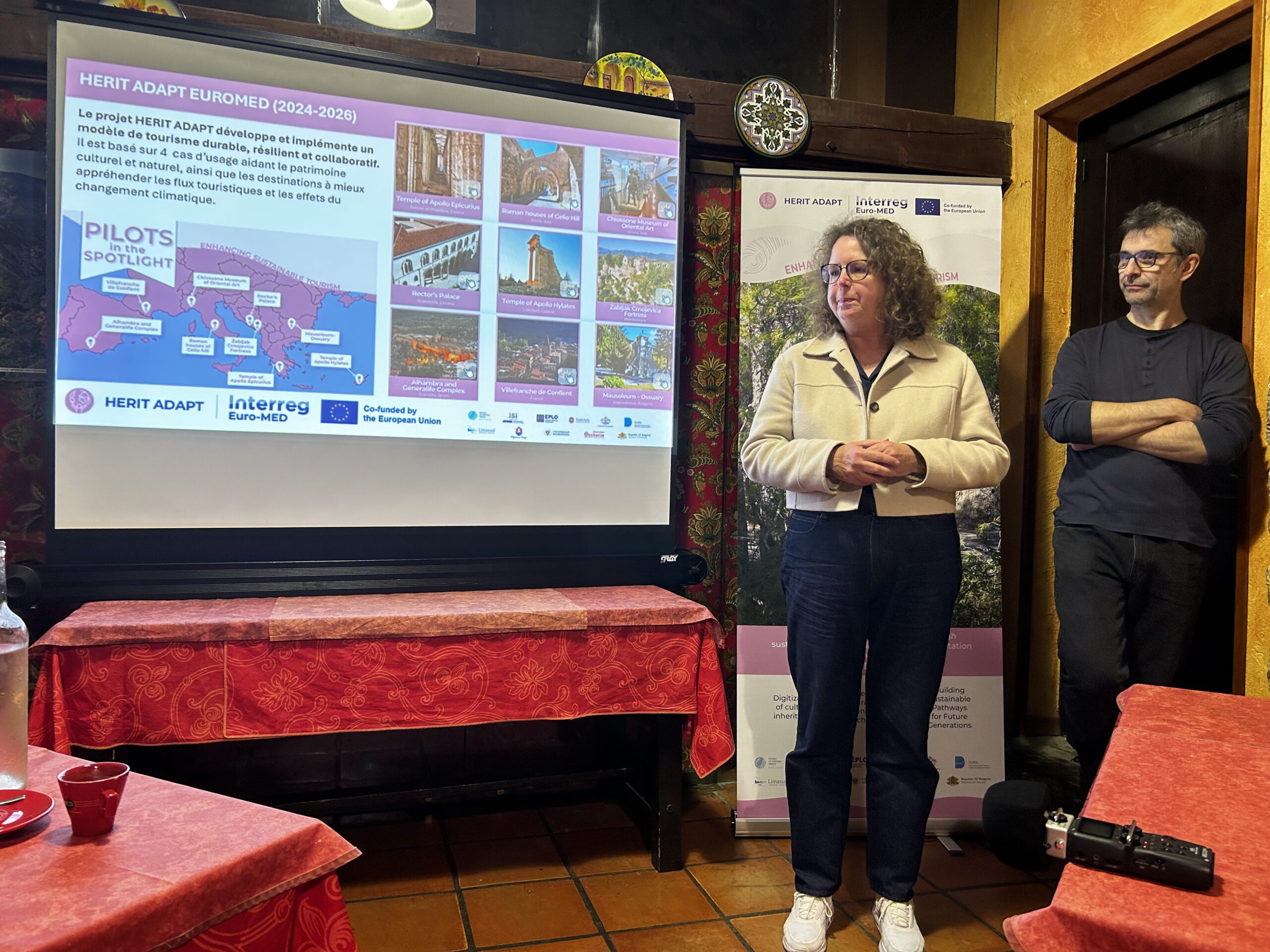
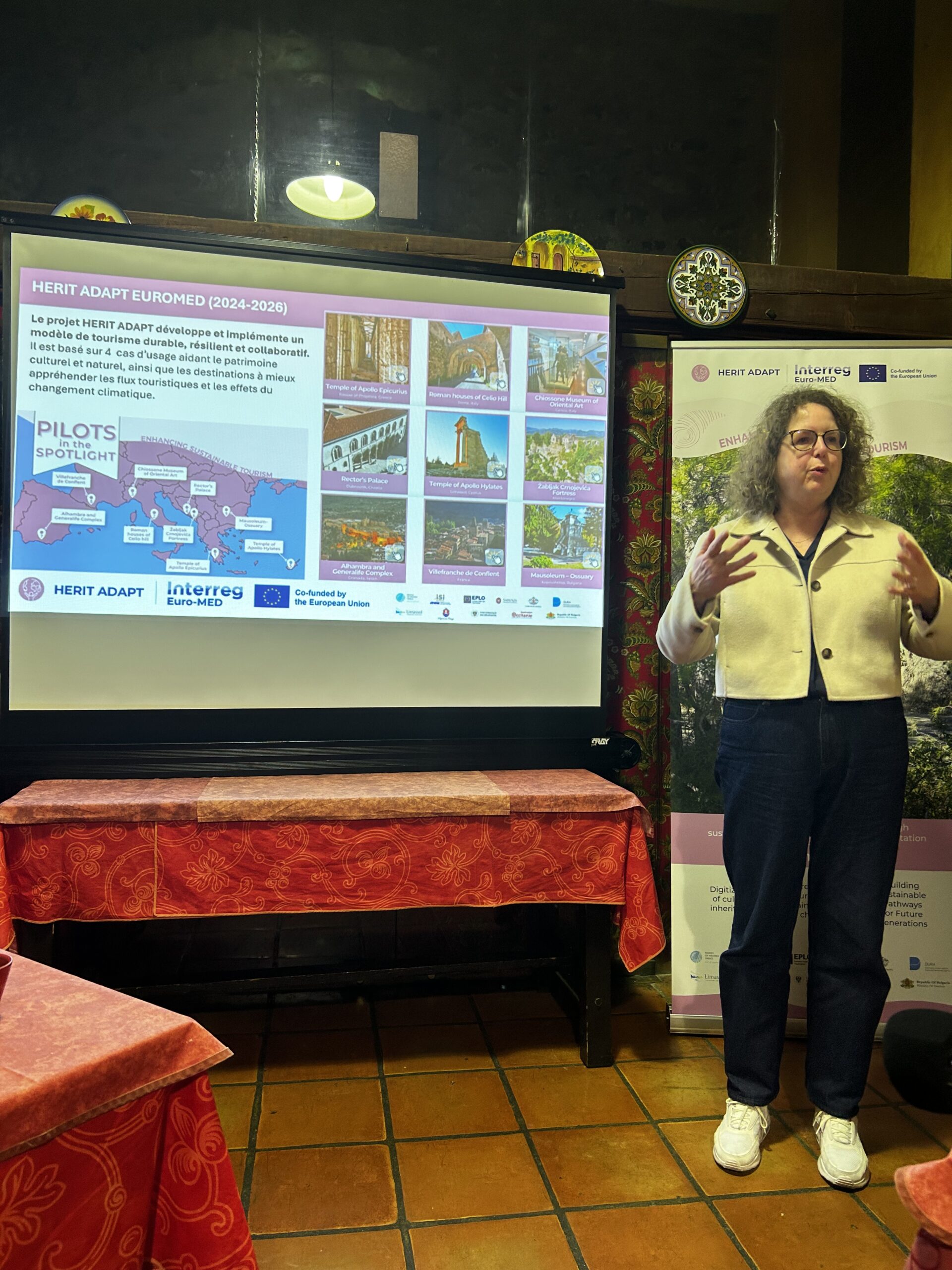
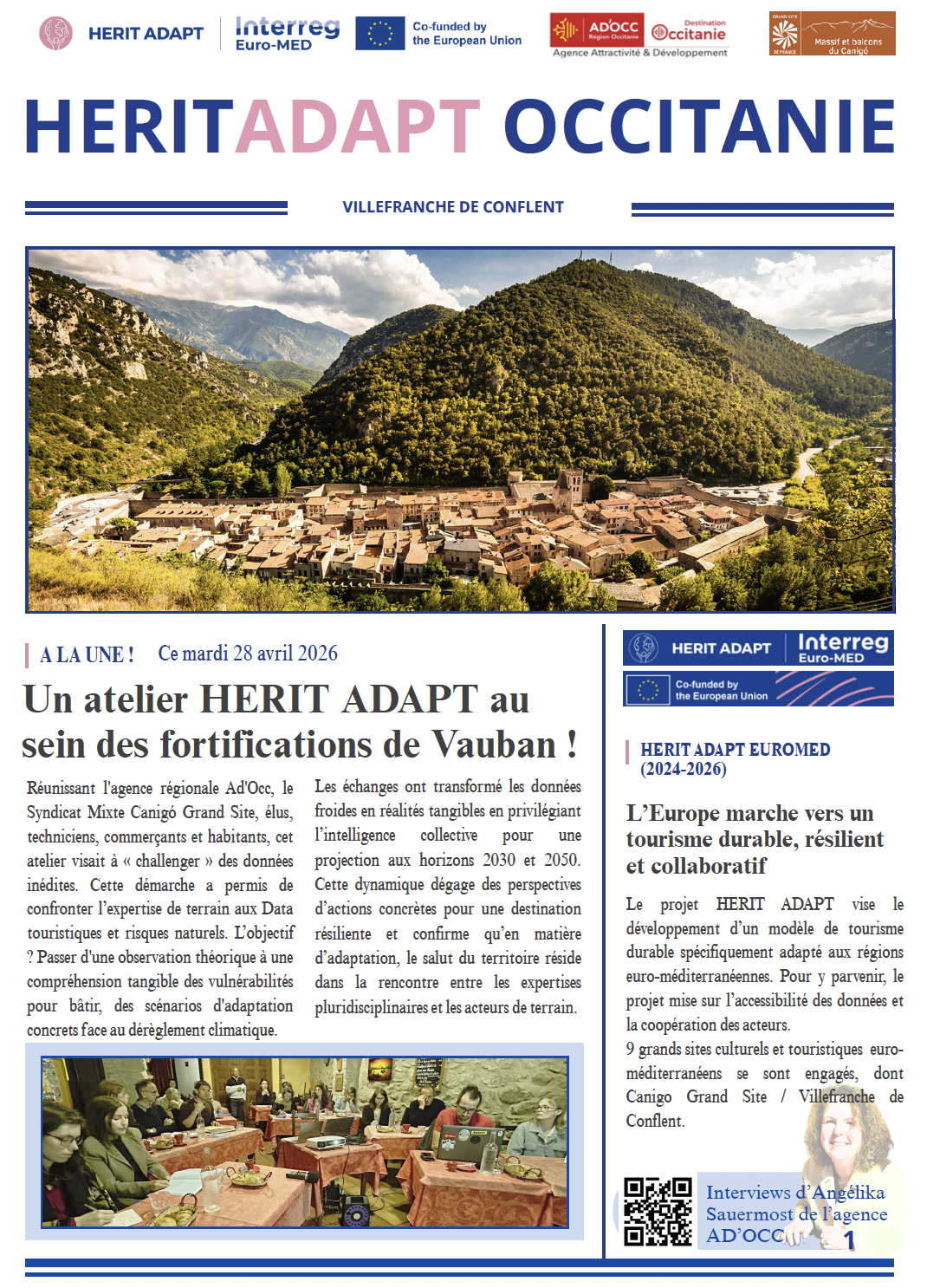
On April 28, 2026, a collaborative workshop was held in Villefranche-de-Conflent (Grand Site du Canigou) within the framework of HERIT ADAPT. The event brought together the regional agency AD’OCC, the Canigó Grand Site Joint Association, local elected representatives, technical staff, business owners, and residents to develop a shared understanding of the territory’s key challenges related to tourism and climate change, and to identify concrete pathways toward more sustainable and resilient development.
The workshop combined newly collected data on tourism flows and natural risks with local expertise, enabling participants to move from theoretical analysis to a more grounded understanding of site vulnerabilities. This exchange strengthened the foundations for future climate adaptation strategies.
Through a participatory and collective approach, stakeholders transformed data into actionable insights and explored potential development scenarios for 2030 and 2050. Key priorities emerging from the discussions included improving visitor flow management, enhancing sustainable mobility, addressing parking and transport constraints, and diversifying tourism offerings throughout the year.
The meeting confirmed that Villefranche-de-Conflent is not facing overtourism, but rather periodic overconcentration during summer peaks and weekends. It also highlighted significant structural challenges linked to mobility and parking, alongside increasing climate-related risks such as heatwaves, erosion, drought, and landslides, which affect both the UNESCO World Heritage site and the local economy.
Rather than focusing on reducing visitor numbers, participants emphasised the need to optimise flows through improved infrastructure, better coordination of transport services, and a more balanced seasonal distribution of tourism.
The outcomes of the workshop will feed into the development of long-term adaptation scenarios and a replicable methodology that can support other Euro-Mediterranean heritage sites in strengthening resilience, sustainability, and climate preparedness.
Key points to remember:
- Villefranche is not experiencing overtourism, but occasional overconcentration during peak periods.
- Parking and mobility remain the main bottlenecks.
- Climate change is expected to significantly impact the site (heatwaves, erosion, natural risks).
- Adaptation relies on:
- Improved flow management (soft mobility, park-and-ride systems)
- Diversified tourism offers (off-season events, spa/thermal tourism)
- Active heritage preservation (restoration and monitoring)
- Stronger coordination across local, regional, and European stakeholders
Final message:
“Villefranche’s resilience is not decreed; it is built collectively. Every stakeholder—elected officials, shopkeepers, residents, and visitors—has a role to play. The objective is not to limit tourism, but to manage it so it becomes a strength rather than a threat.”