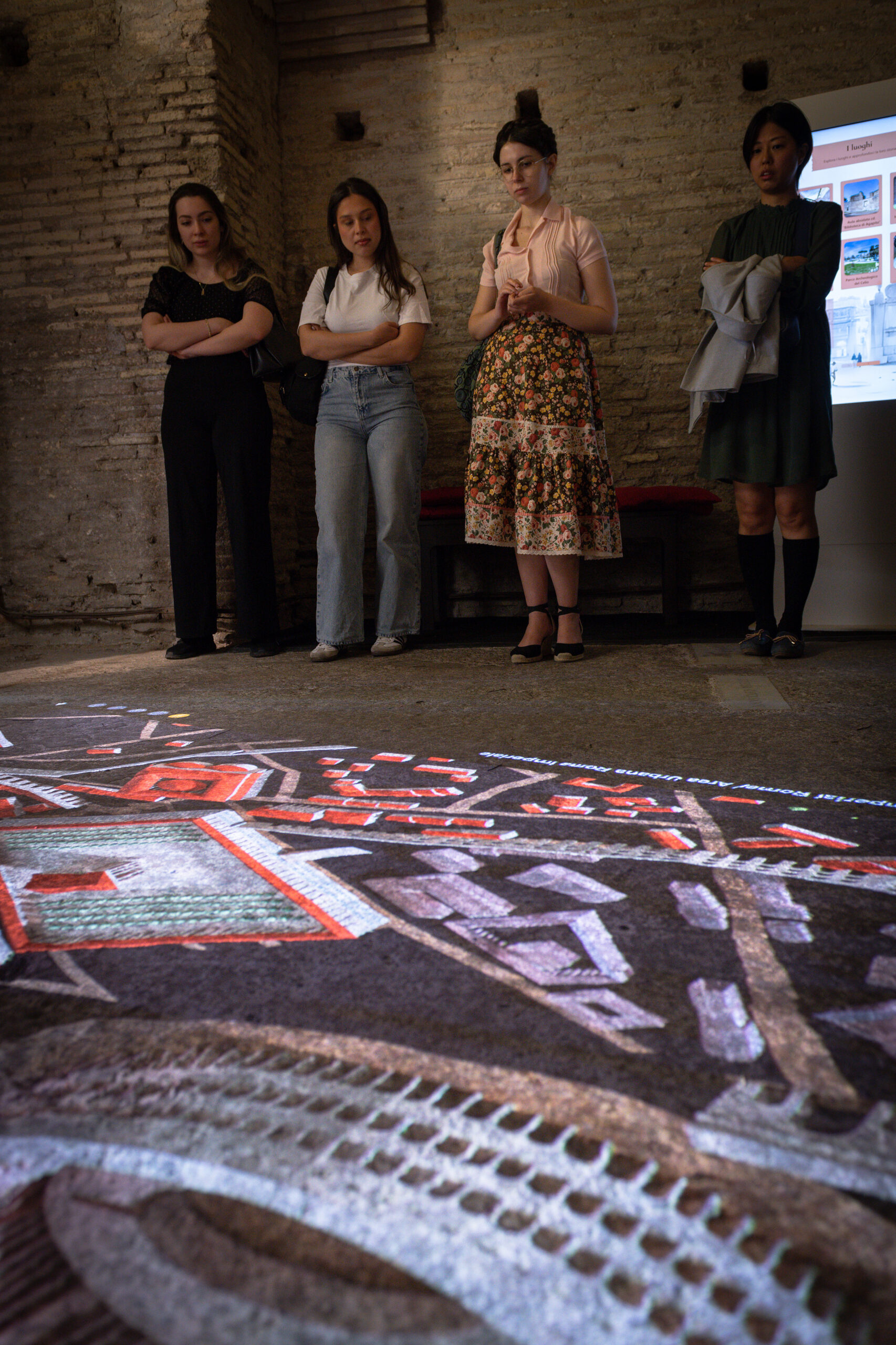
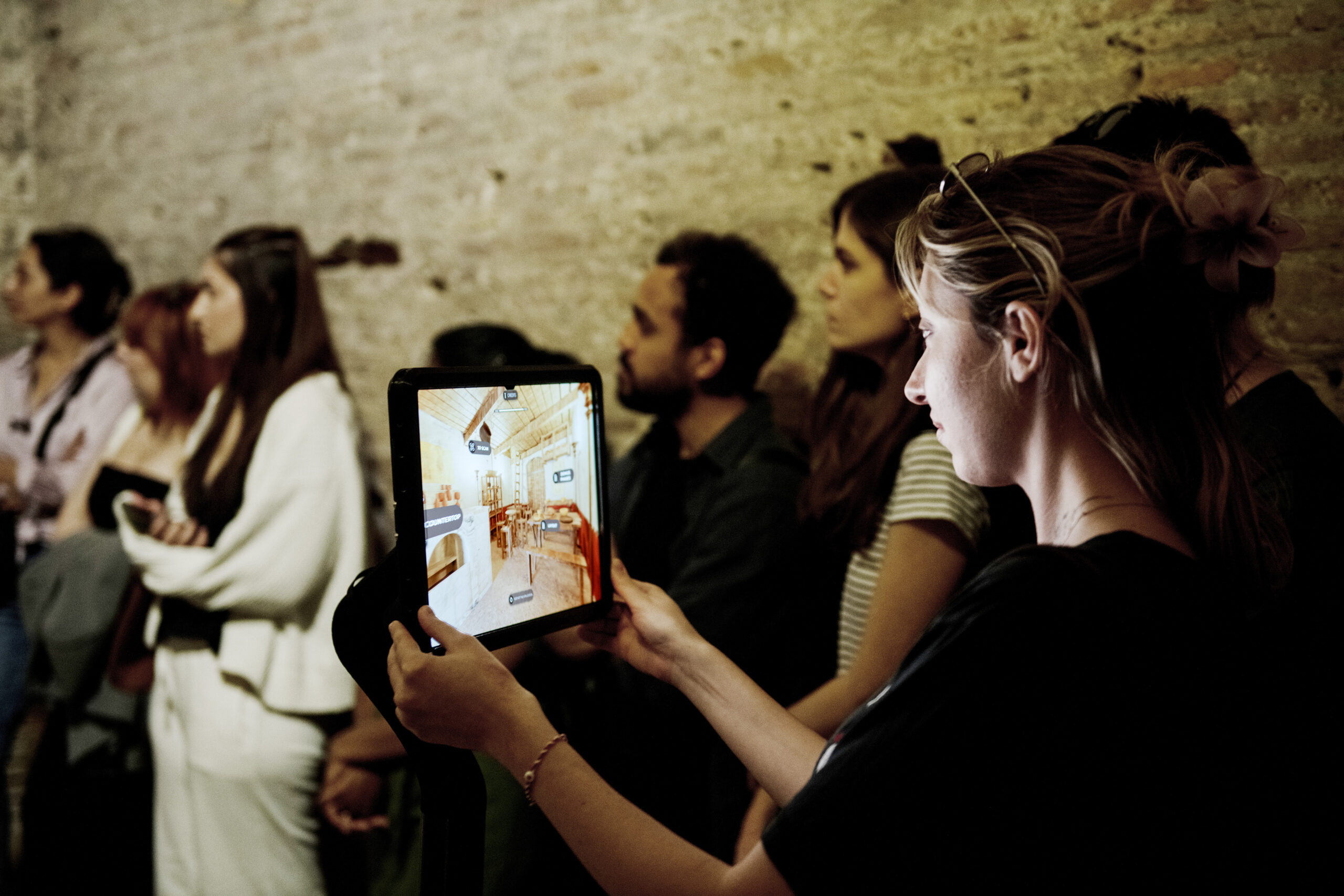
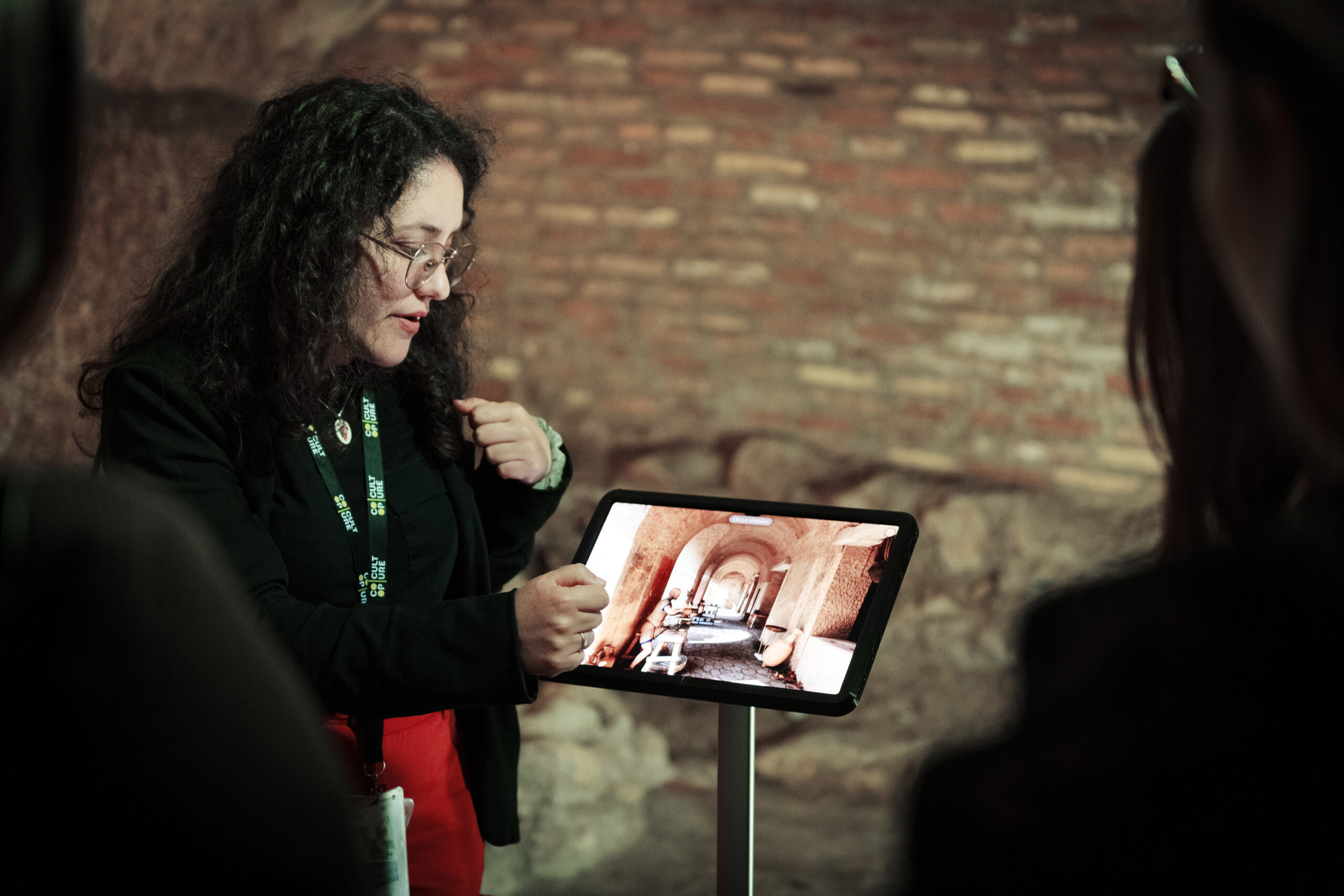
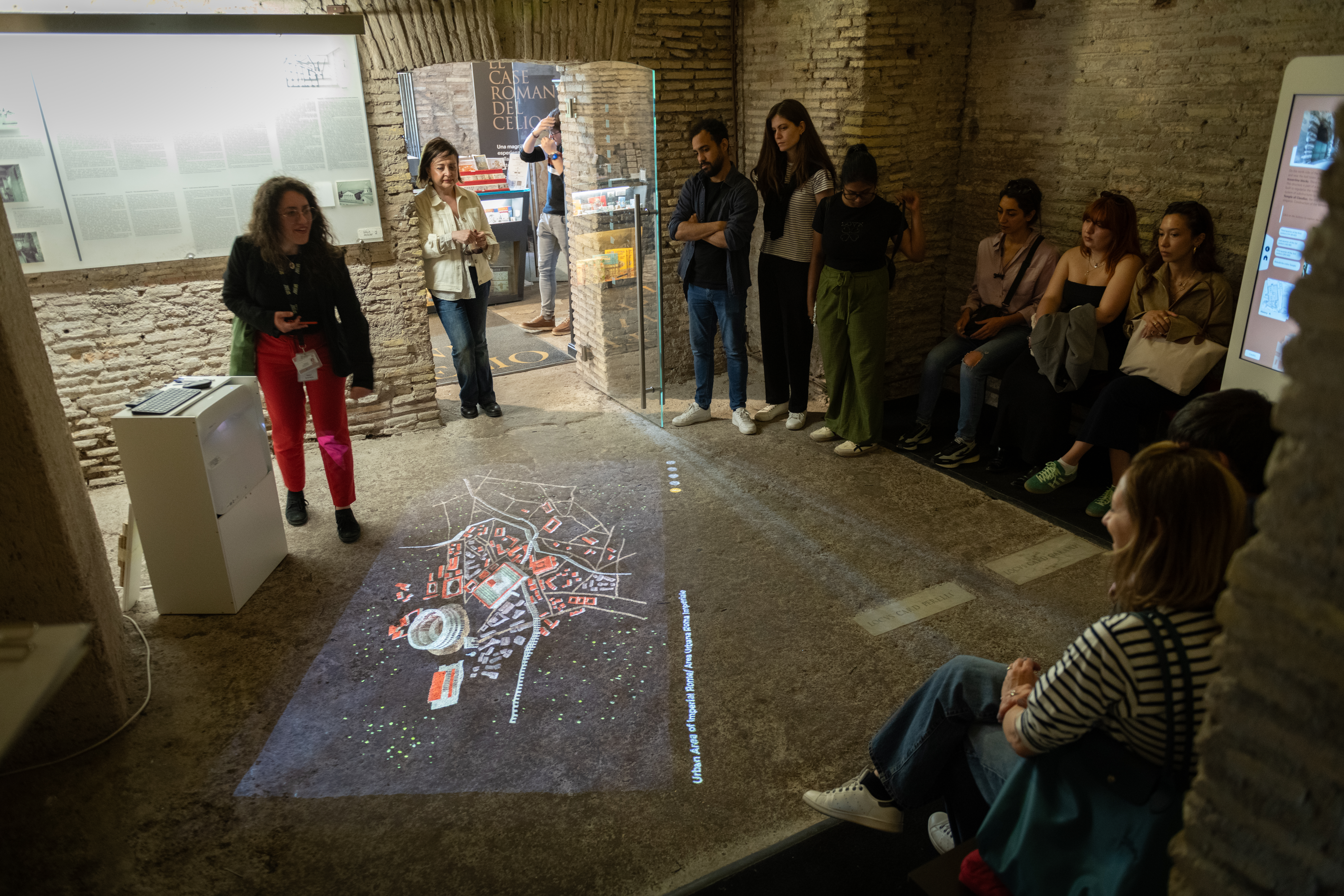
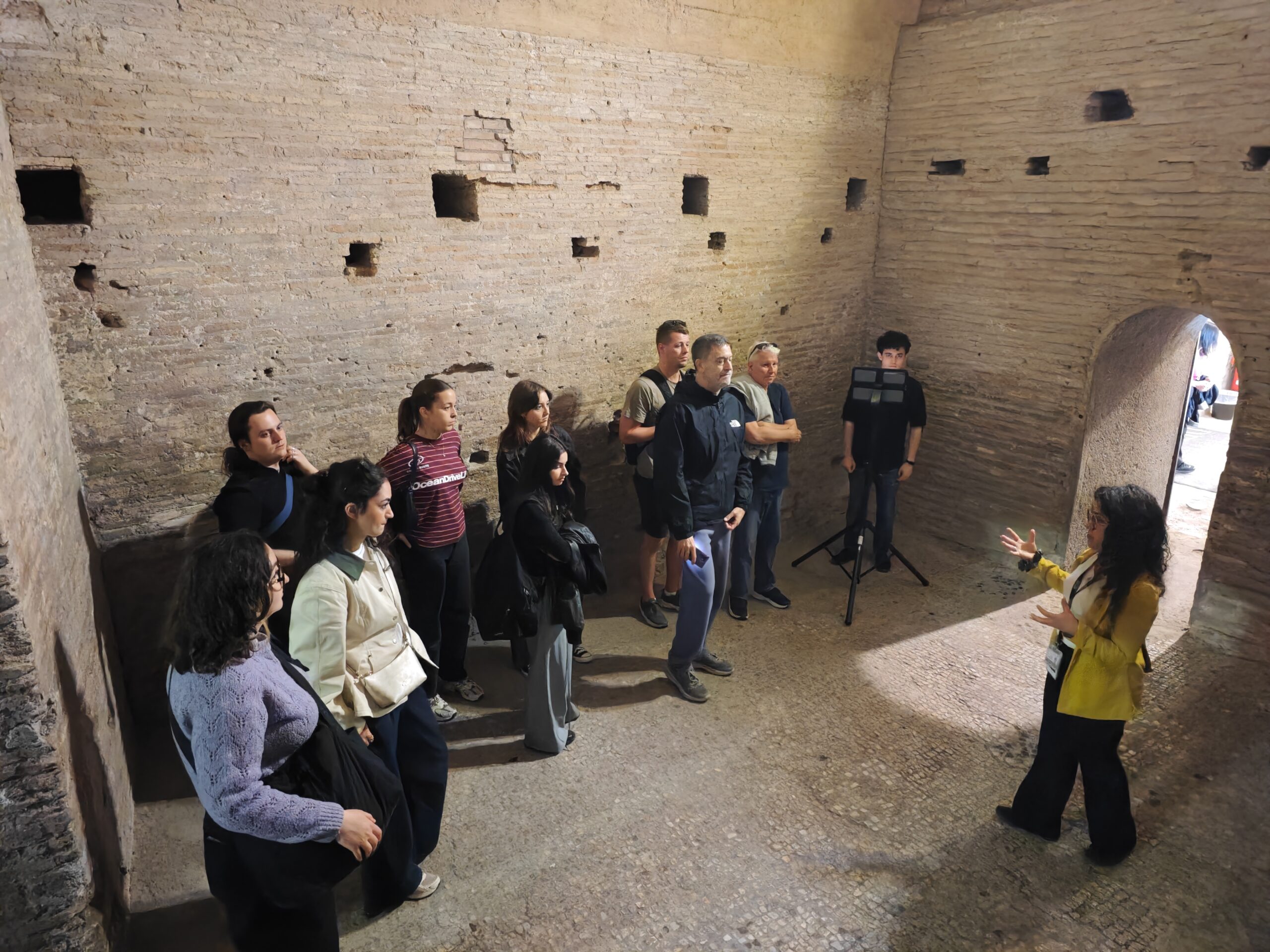
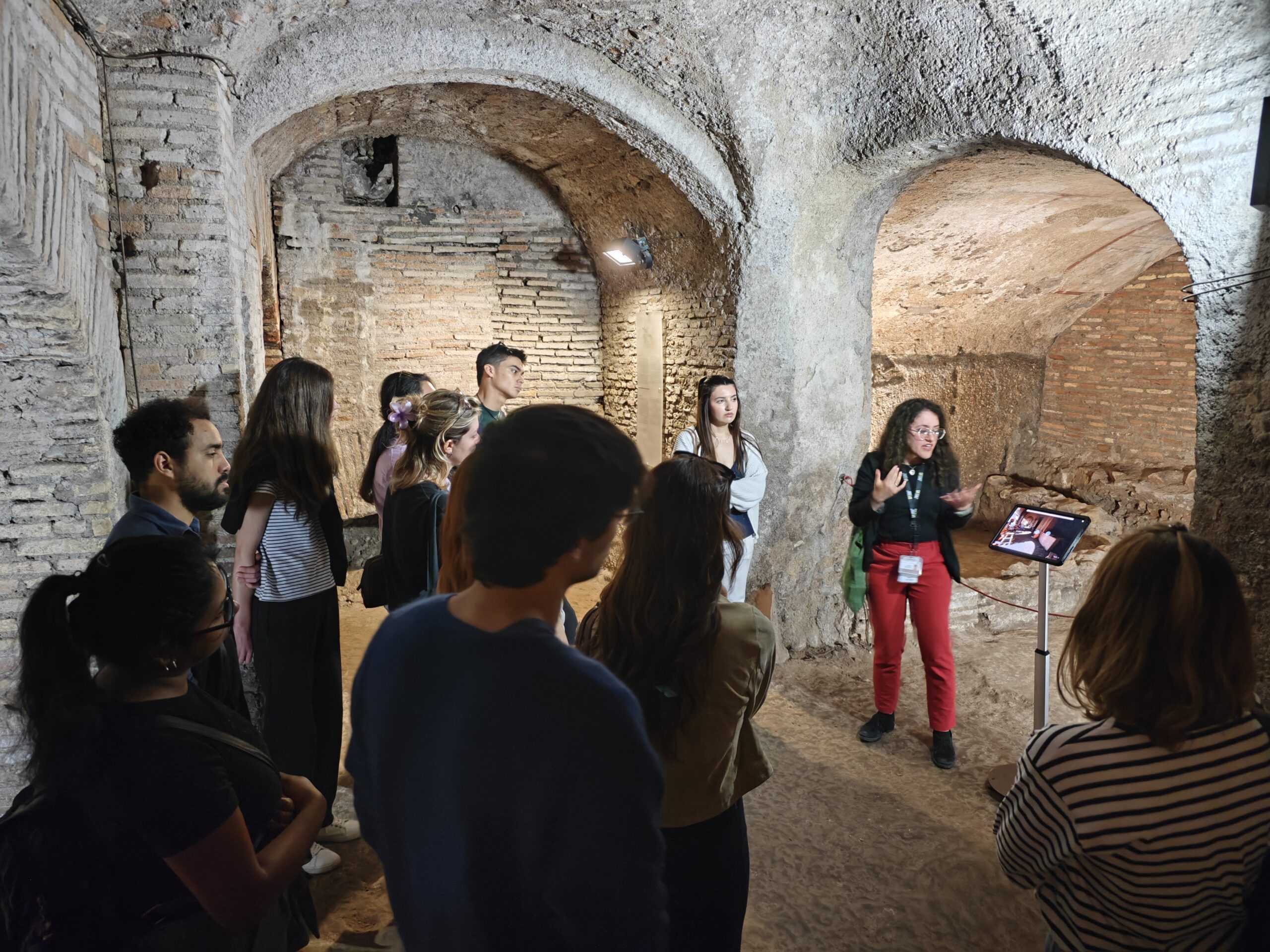
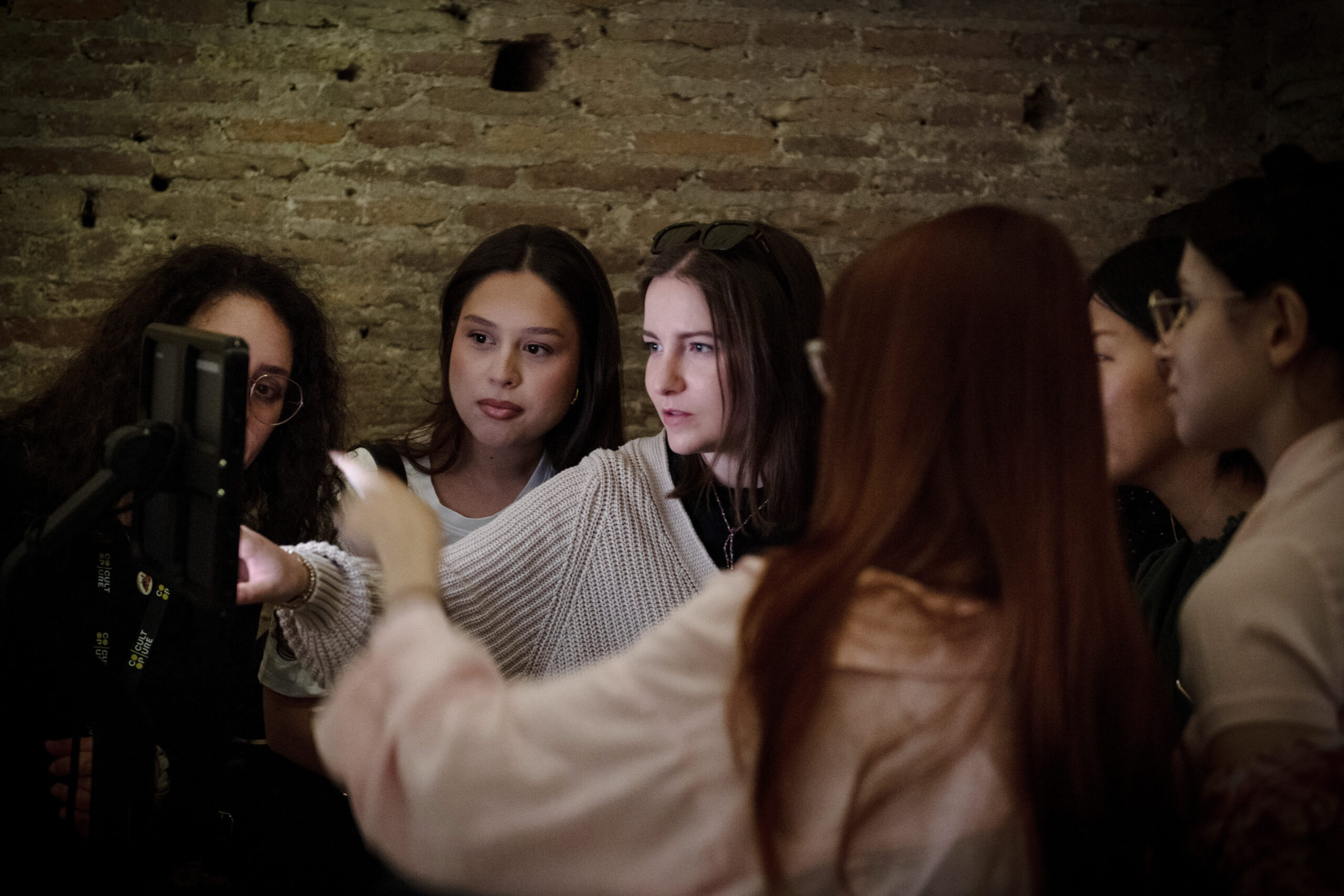
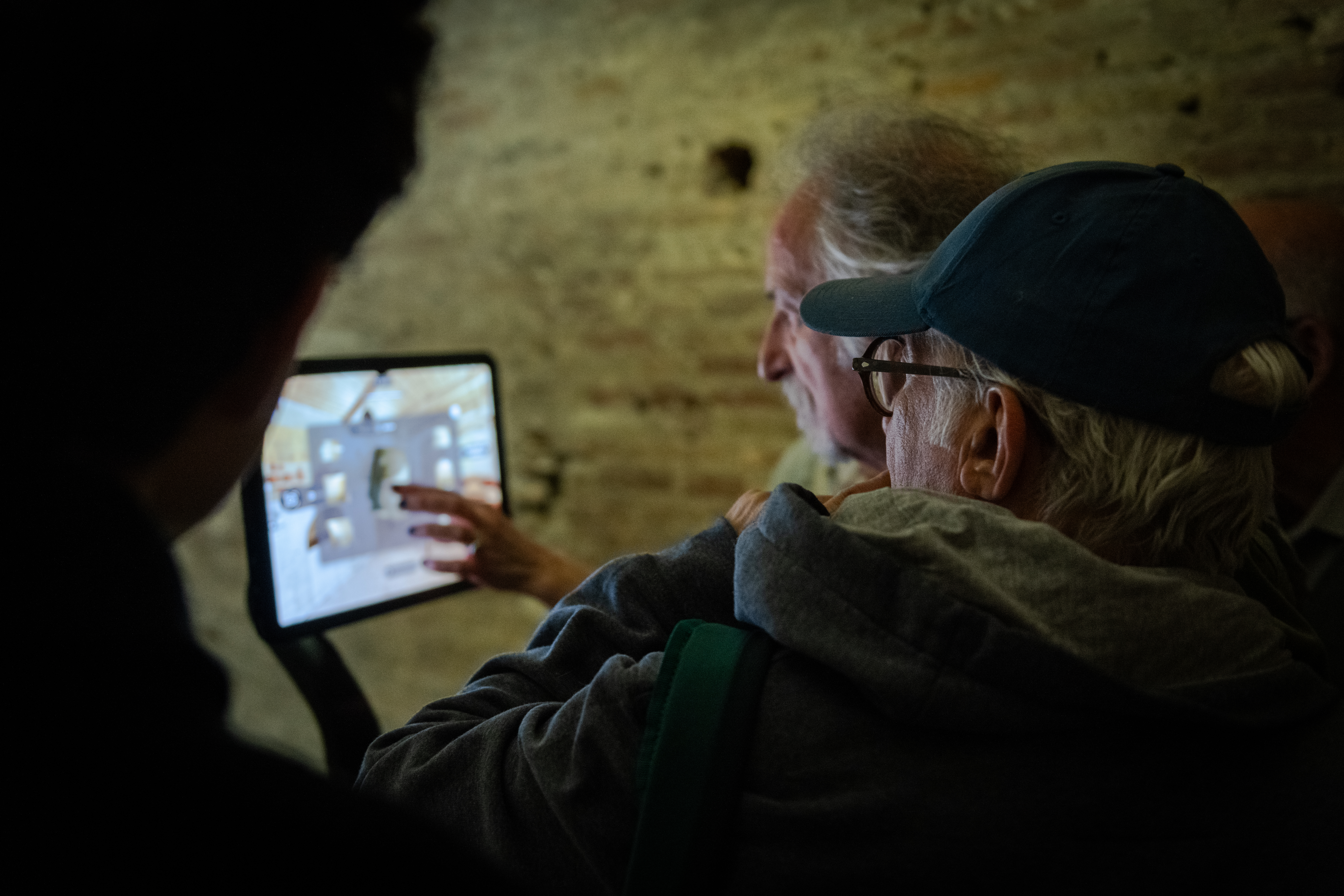
From 29 April to 14 May 2026, Sapienza University of Rome presented the results of the HERIT ADAPT pilot project during a public exhibition and a series of information days at the Roman Houses of the Celio Hill (Case Romane del Celio). The initiative engaged approximately 200 visitors, including cultural heritage professionals, tour guides, CoopCulture staff and guides of the Roman Houses of the Celio Hill, local stakeholders, and members of the general public. As part of the evaluation process, 85 visitors completed questionnaires, providing valuable feedback on the pilot activities and digital installations.
Located just a short walk from the Colosseum, the Roman Houses of the Celio Hill are a remarkable yet relatively little-known archaeological complex. The exhibition demonstrated how digital technologies can enrich the interpretation of such “hidden” heritage sites while promoting more sustainable tourism by encouraging visitors to discover attractions beyond the city’s most crowded landmarks.
The pilot featured three innovative, non-invasive digital installations developed by Sapienza University of Rome:
-
An interactive floor projection presenting the historical evolution of the site, from Roman houses to an early Christian complex.
-
A tablet-based augmented reconstruction of the ancient Bottega, allowing visitors to visualise the original appearance of the space using the archaeological remains still visible today.
-
An interactive digital flythrough of the Wine Cellar, revealing the story of its discovery and the archaeological findings hidden beneath its walls.
The exhibition highlighted how digital storytelling can make cultural heritage more accessible, engaging, and immersive while complementing the work of professional tour guides rather than replacing it. By enhancing the visitor experience at lesser-known heritage sites, the HERIT ADAPT approach contributes to more balanced visitor flows, supports sustainable tourism, and increases public appreciation of local cultural assets.
The event also provided an important opportunity to collect user feedback on the effectiveness of the installations and visitor experience. The responses gathered during the exhibition will inform the further development of open and replicable digital tools that can be adapted by heritage sites across the Mediterranean region.