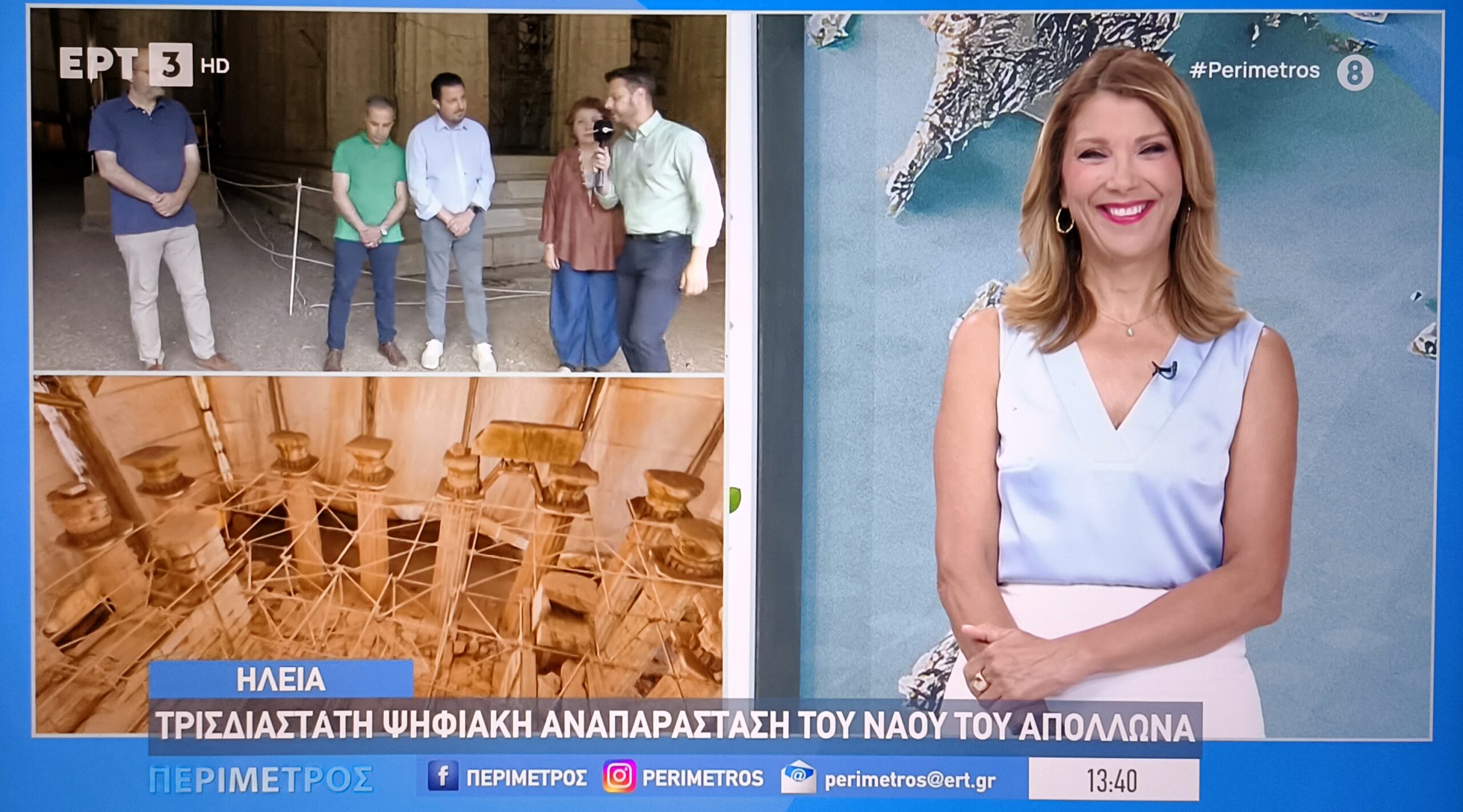
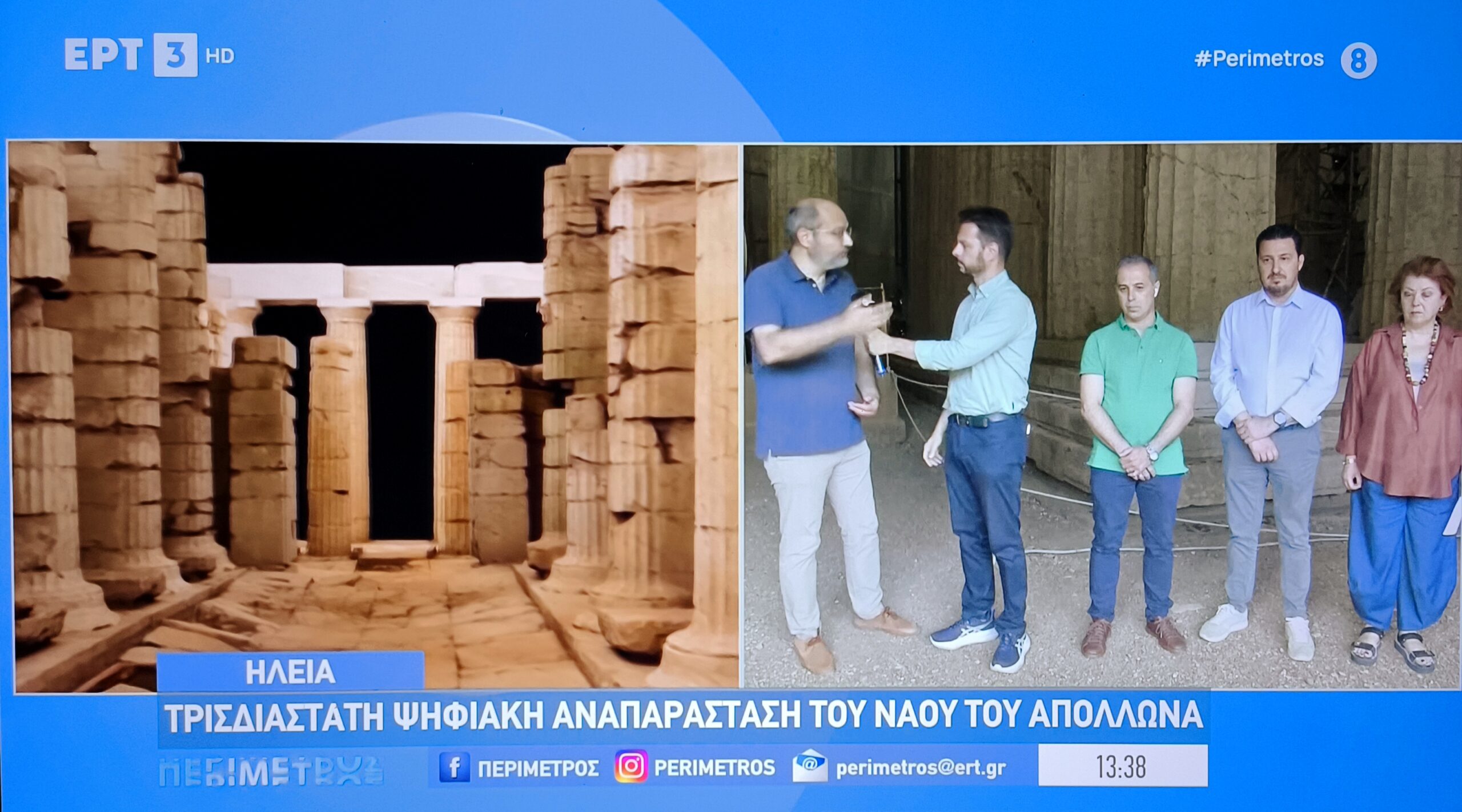
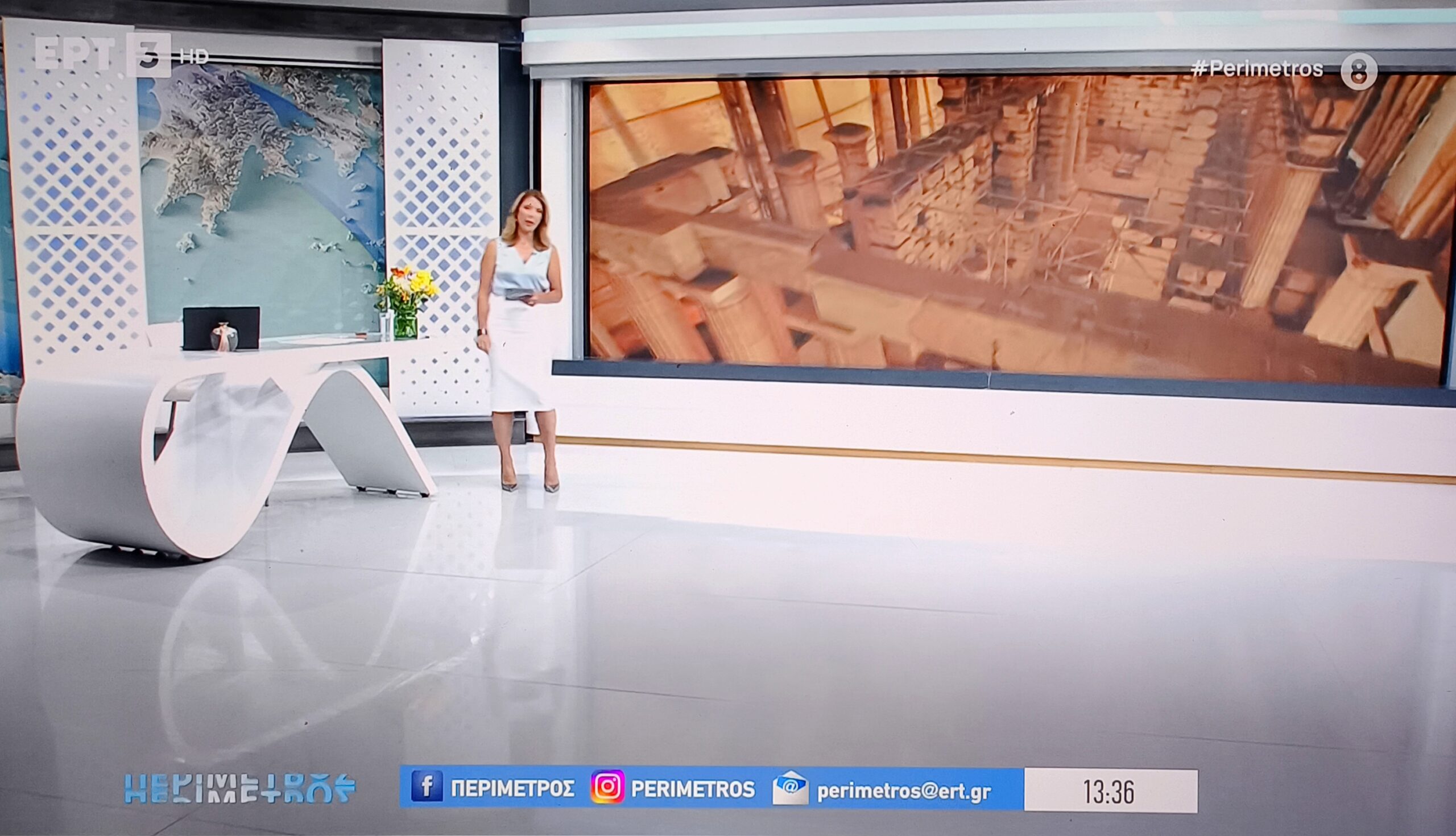
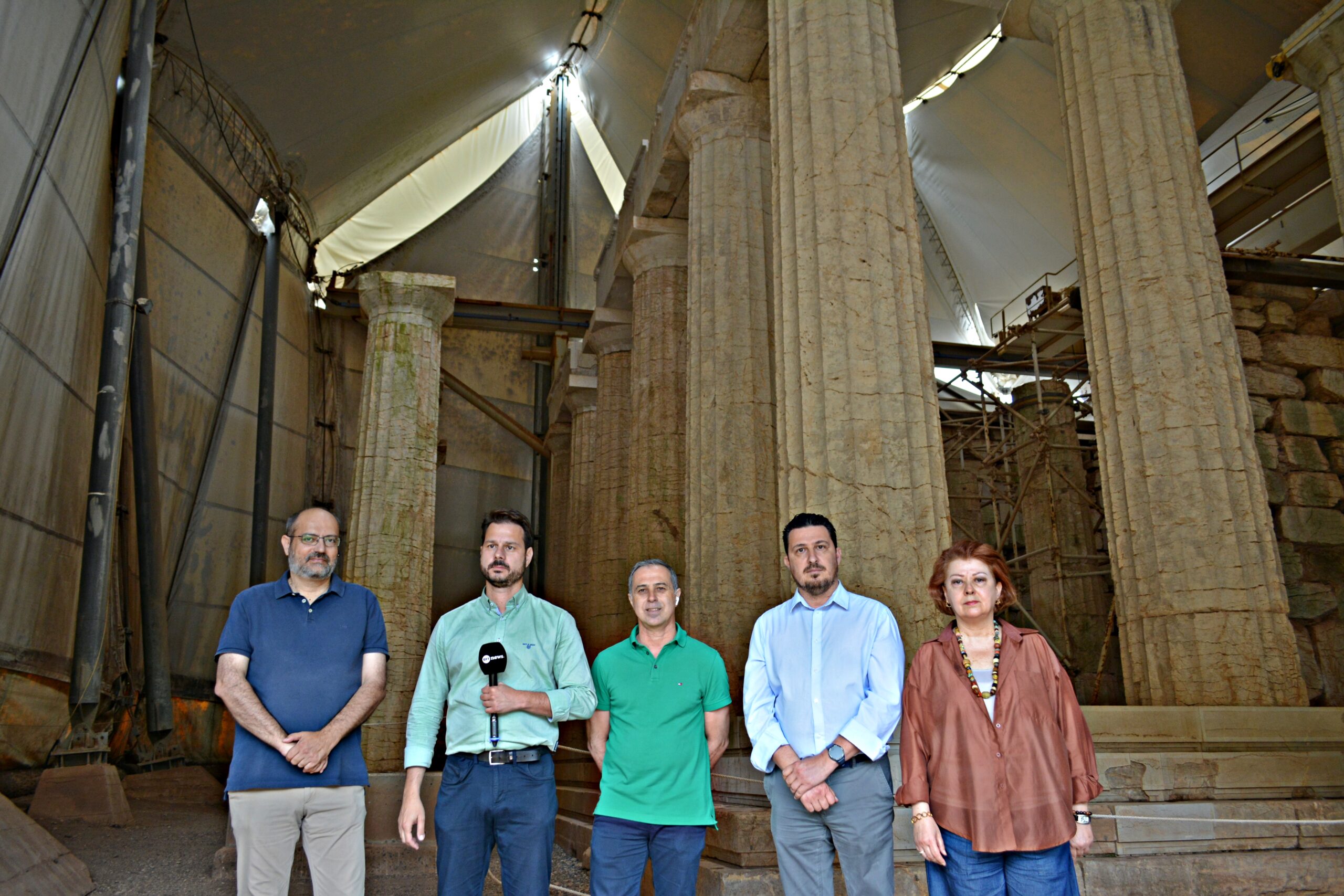
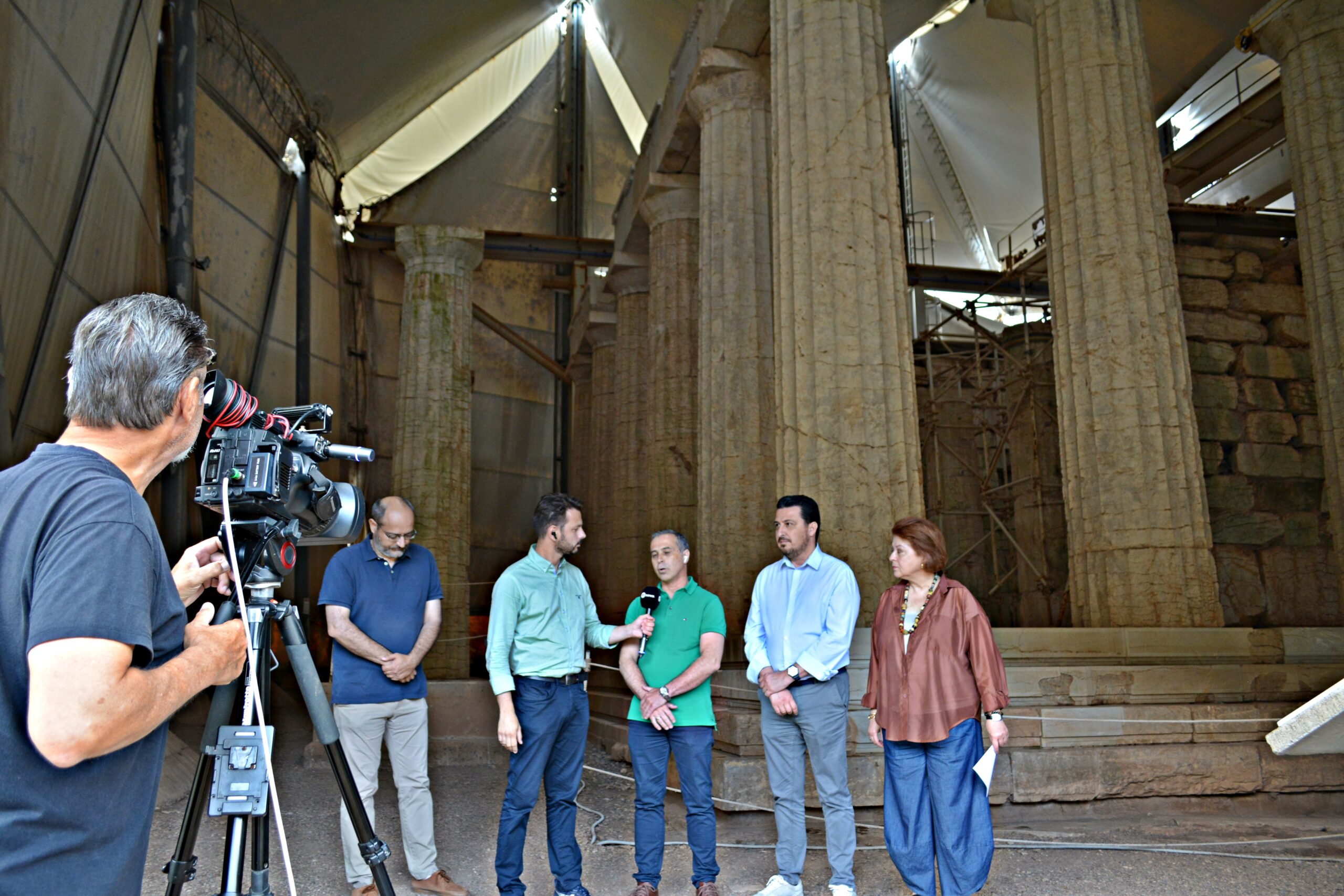
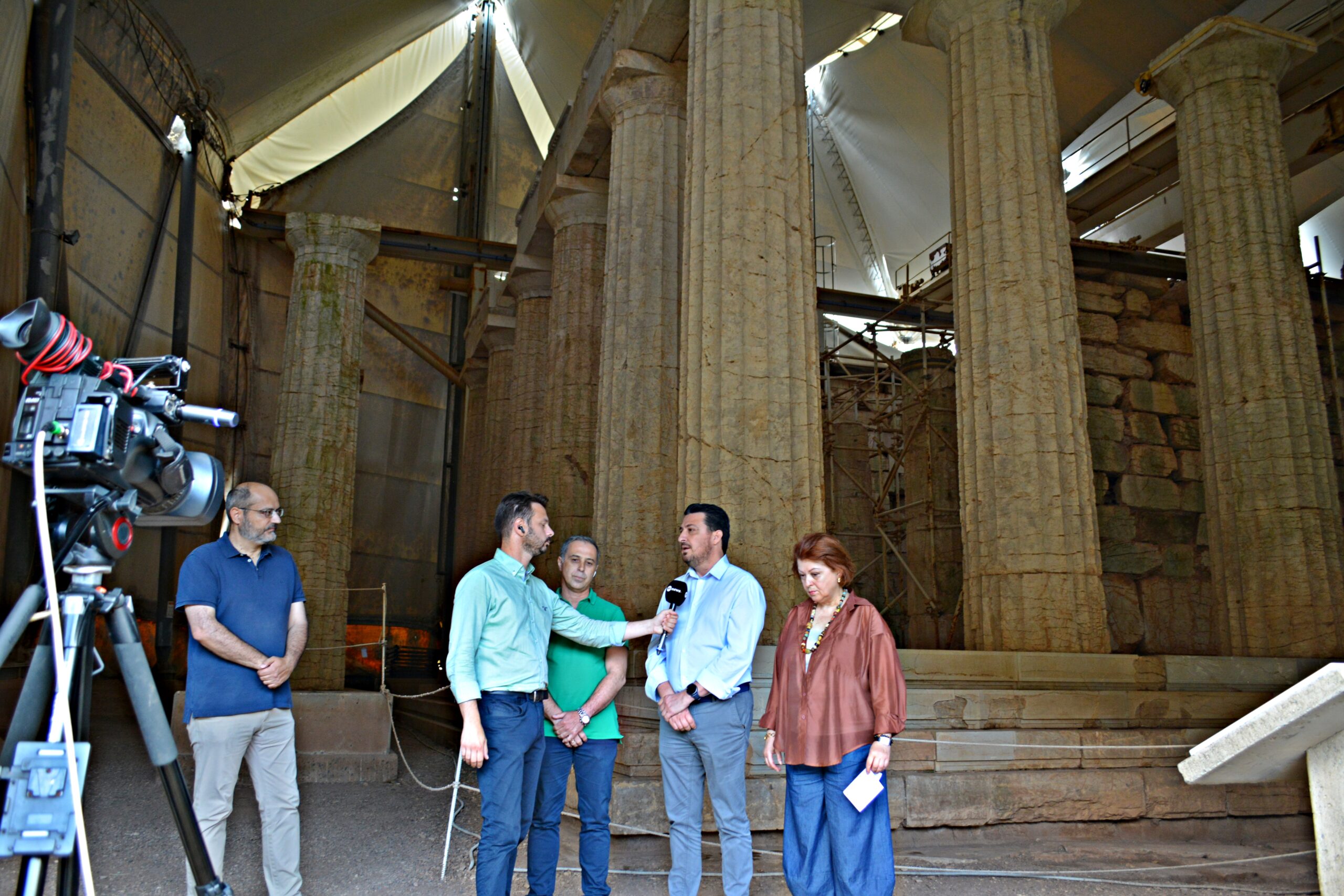
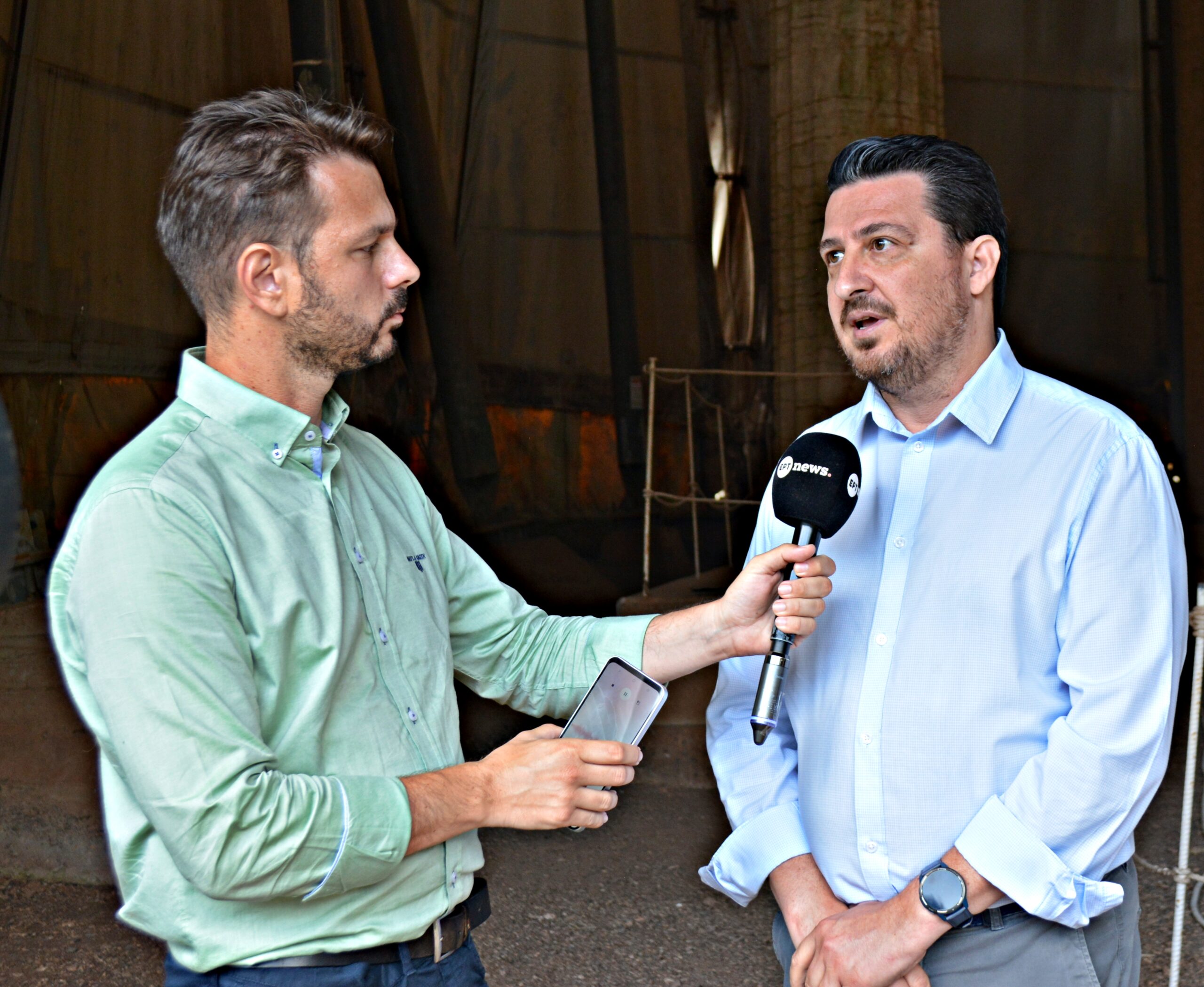
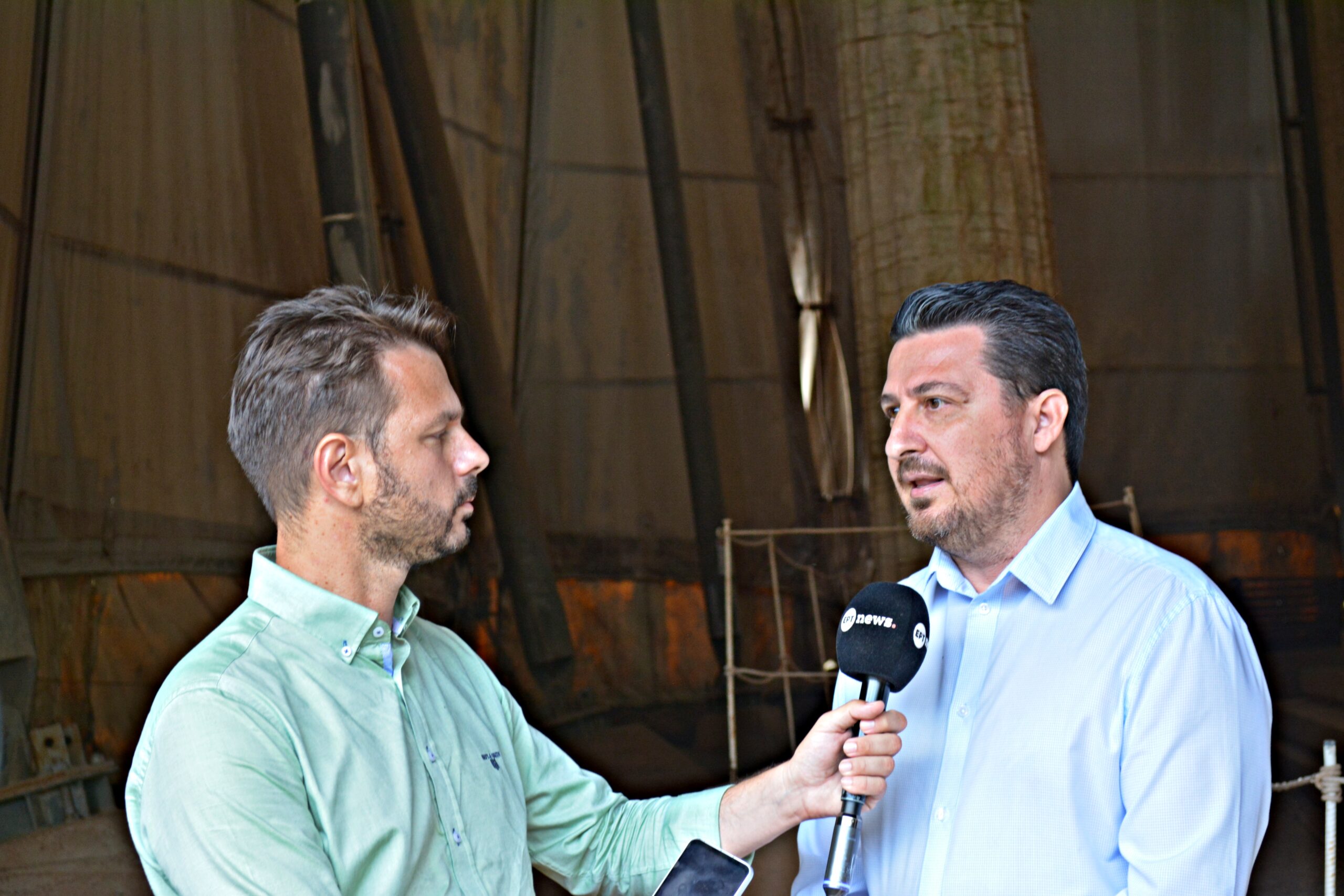
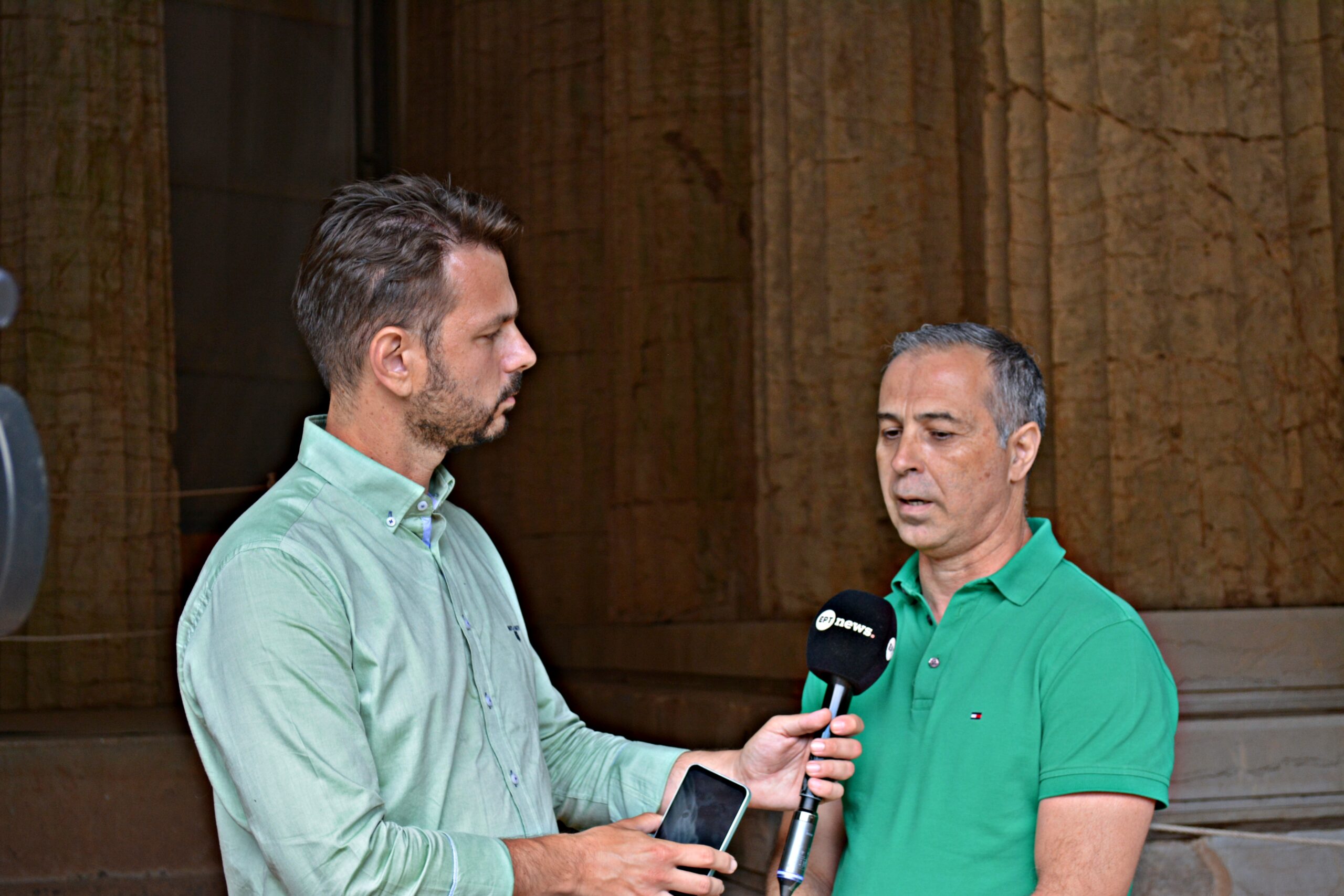
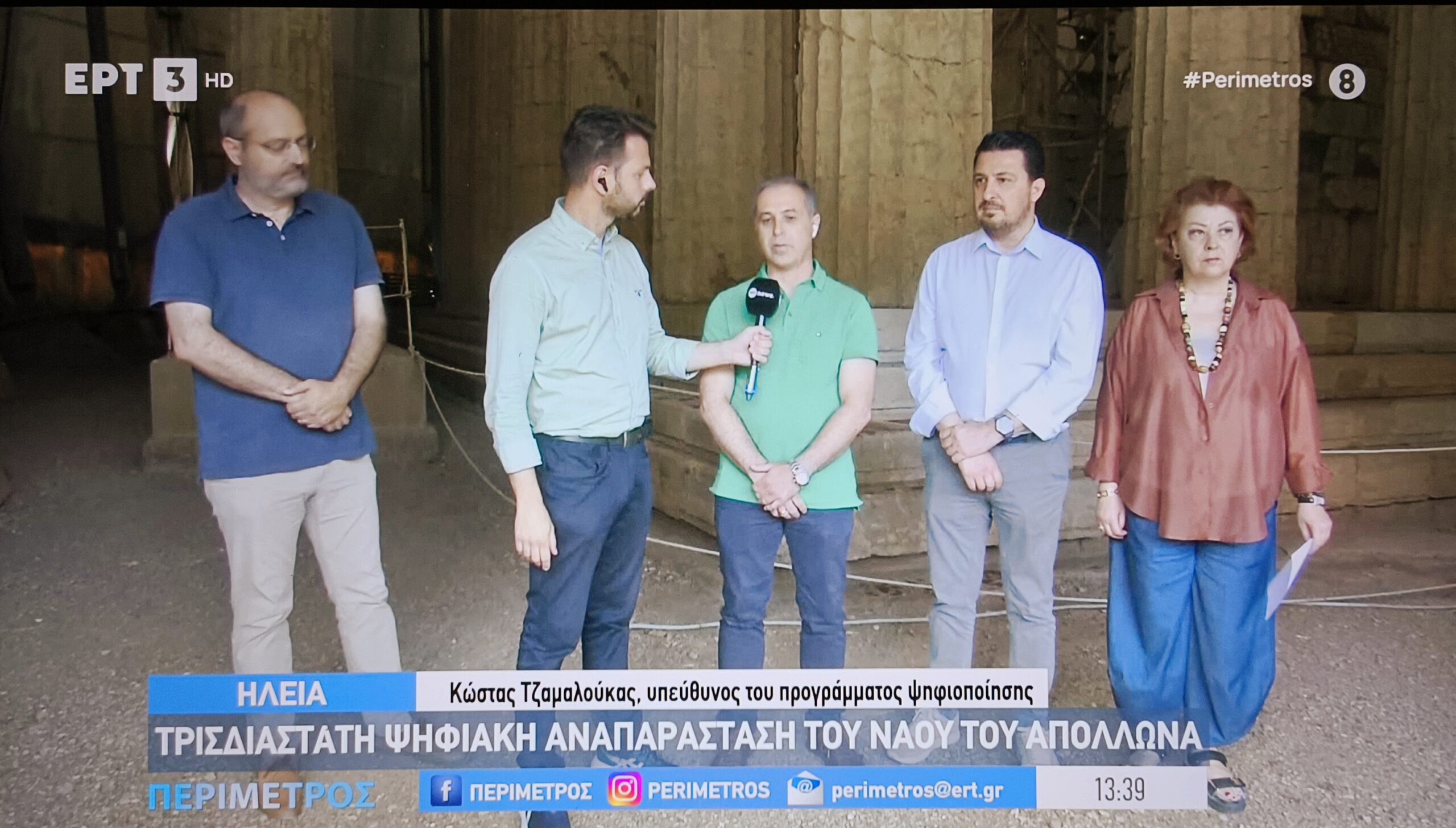
On June 25, 2026, the Greek pilot of HERIT ADAPT was featured on the TV programme “Perimetros” on the Greek National TV channel, ERT3.
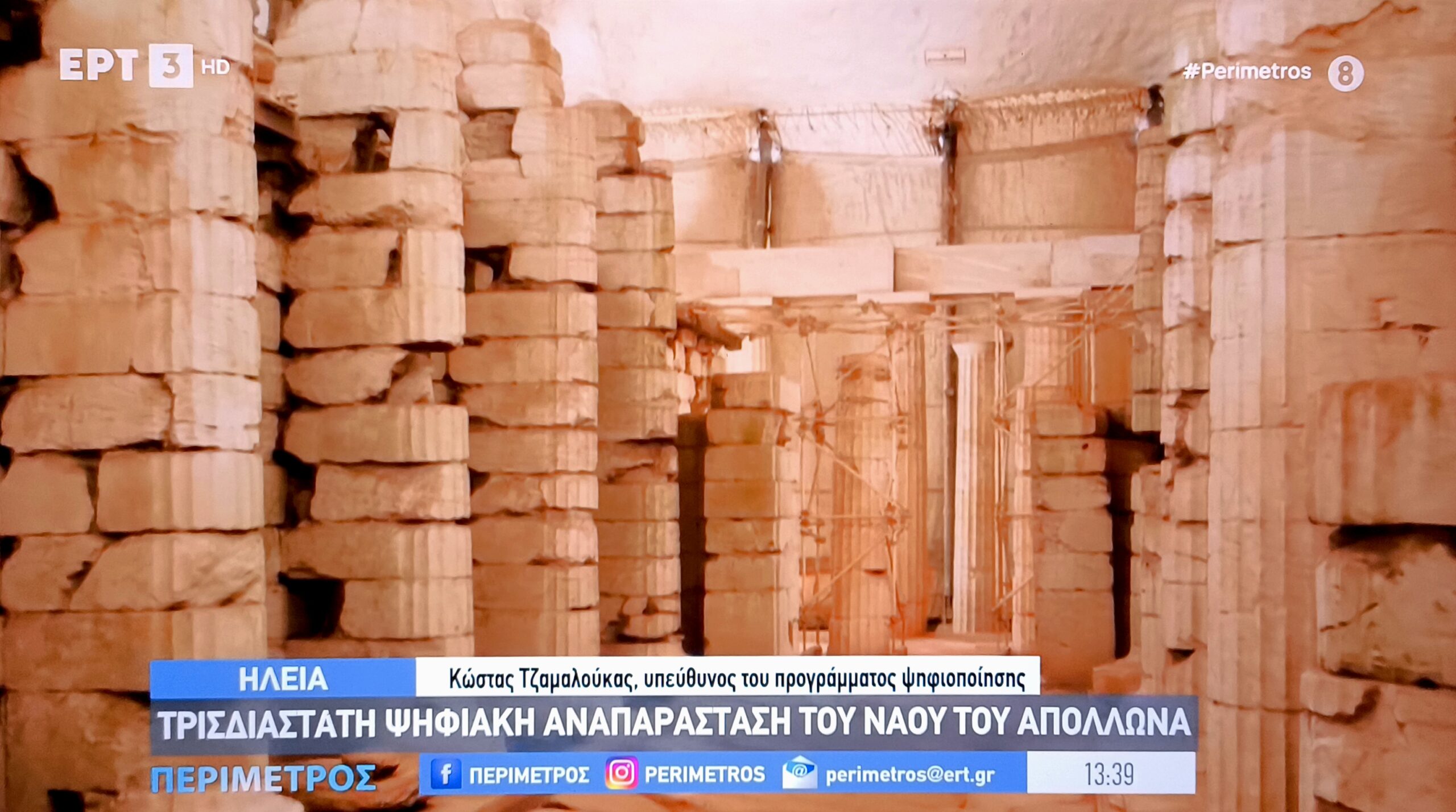
The HERIT ADAPT Greek pilot at the Temple of Apollo Epicurius was presented, featuring its digital twin developed by the project partner Industrial Systems Institute of the Athena Research Center, with short video clips of the 3D model shown during the live broadcast. The presentation of the Greek pilot was led by Dr. Konstantinos Papadopoulos, Civil Engineer, Hellenic Ministry of Culture, Project Manager for the Restoration of the Temple of Apollo Epicurius, and Head of the Department of Archaeological Works and Studies of the Ephorate of Antiquities of Ilia and Kostas Tzamaloukas from the Region of Western Greece, with further contributions from the Deputy Governor of Culture of the Region of Western Greece Panagiotis Mpramos and the president of the Olympian Association Sofia Lampropoulou. During the broadcast, the speakers highlighted the importance of creating a digital 3D twin of the temple’s current state, as it is susceptible to constant structural degradation due to the harsh climate of its mountainous location. Furthermore, they emphasized the project’s objective to promote a sustainable tourism model for both the archaeological site and the surrounding villages, noting that the temple remains in obscurity to the general public due to its remote location.
Finally, particular emphasis was placed on the ongoing efforts of the Ephorate of Antiquities of Ilia, to secure state funding for a new shelter for the temple, and ideally the construction of a new permanent roof mirroring the temple’s original architecture, thereby shielding it from the elements.
Read the full interview:
ERT3 journalist: Good afternoon from the Temple of Apollo Epicurius at Bassae in Figaleia, in the mountainous southern part of the Ilia region. I’m here with the key people behind this innovative initiative to digitally document the Temple of Apollo Epicurius. Without further delay, I’ll turn to our first guest, Mr. Papadopoulos, who is responsible for the restoration project carried out here by the Ephorate of Antiquities. Mr. Papadopoulos, what is this digitisation and 3D modelling project for the Temple of Apollo Epicurius?
Mr. Papadopoulos: First of all, thank you very much for the invitation. The digitisation of the monument was carried out as part of a European Interreg programme. In Greece, the lead partner responsible for implementation was the Region of Western Greece. The Ephorate of Antiquities collaborated with the Region and the Athena Research Center to digitise the monument. Essentially, a complete digital record or “snapshot of the monument in its current condition was created. This is particularly important not only because it helps promote and showcase the monument, but also because restoration work has been carried out in phases since 2001. As a result, the monument is constantly changing, its condition is dynamic. While its state of preservation is continuously improving, documenting every stage is one of our responsibilities and is essential for the continuation of the restoration works. Therefore, this digital model is an extremely valuable tool both for us and for future researchers studying this exceptional monument.
ERT3 journalist: Now, Mr. Kostas Tzamaloukas, the project coordinator, will explain the rationale behind this digital initiative.
Mr. Tzamaloukas: As Mr. Papadopoulos mentioned, following the completion of the European project HERIT ADAPT, in which the Region of Western Greece participated as the lead partner, we created a digital model of the monument using photogrammetry and 3D imaging techniques, supported by artificial intelligence algorithms. This work was carried out in collaboration with the Athena Research Center, under the guidance of Research Director Mr. Kalogeras and his team. What was the objective? HERIT ADAPT focuses on cultural heritage, climate adaptation, resilience, and the involvement of local communities. The project aims to develop sustainable tourism models that both promote and protect the monument while also supporting local communities by helping them benefit from the presence of such an important cultural landmark.
ERT3 journalist: Mr. Mpramos, Deputy Governor for Culture, what is the goal of this digital initiative?
Mr. Mpramos: For the Regional Authority, the restoration, protection, and promotion of our cultural heritage monuments are a top priority. That is why the Temple of Apollo Epicurius, a UNESCO World Heritage Site, was included in the HERIT ADAPT project. However, this is not an isolated initiative. It forms part of a much broader programme of actions. In addition to HERIT ADAPT, a further €3.1 million has been secured in cooperation with the Ministry of Culture for the replacement of the current protective shelter, the tent structure you can see here. We firmly believe that investing in cultural heritage and enhancing archaeological sites is of great importance.
ERT3 journalist: The footage we’ve just seen is truly impressive. It almost feels as though you’re actually walking inside the temple, that is the power of this digital technology. Before we finish, let’s also hear from Ms. Lampropoulou, who is with us today. Ms. Lampropoulou represents the Olympian Association, whose emblem is the Temple of Apollo Epicurius.
Ms. Lampropoulou: Thank you very much for the invitation. The Temple of Apollo Epicurius is a unique archaeological monument of exceptional architectural significance. We should also remember that it was the first monument in Greece to be inscribed on the UNESCO World Heritage List. As the Olympian Association, we support, plan, and implement initiatives aimed at promoting the monument and increasing visitor numbers. We warmly welcome the efforts of the Ephorate of Antiquities of Ilia and the Region of Western Greece to restore and digitally document the temple. As part of these efforts, our Association has also submitted for evaluation a proposal for the design of the temple’s new protective shelter. The proposal was prepared by an architect from our region and has already been publicly presented.
ERT3 journalist: One final question about the shelter. Will it finally be replaced after 40 years?
Mr. Papadopoulos: Yes. The current shelter was built in 1987 and was considered one of the world’s most significant passive conservation projects for archaeological monuments. Forty years have now passed, and it is time for it to be replaced. Within this year the Directorate for the Restoration of Ancient Monuments of the Ministry of Culture will launch the tender for replacing the shelter membrane and upgrading the overall condition and effectiveness of the protective structure.