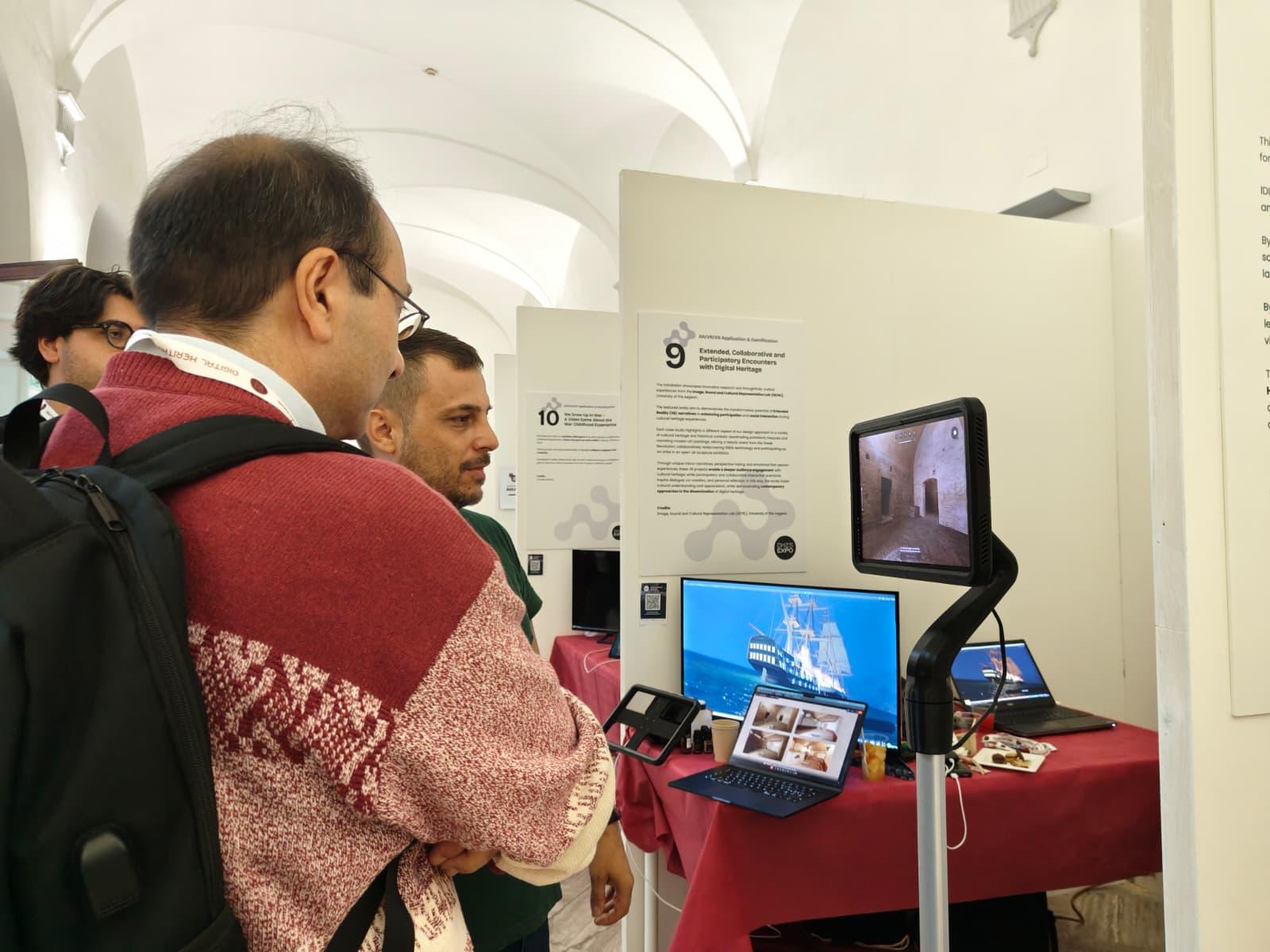
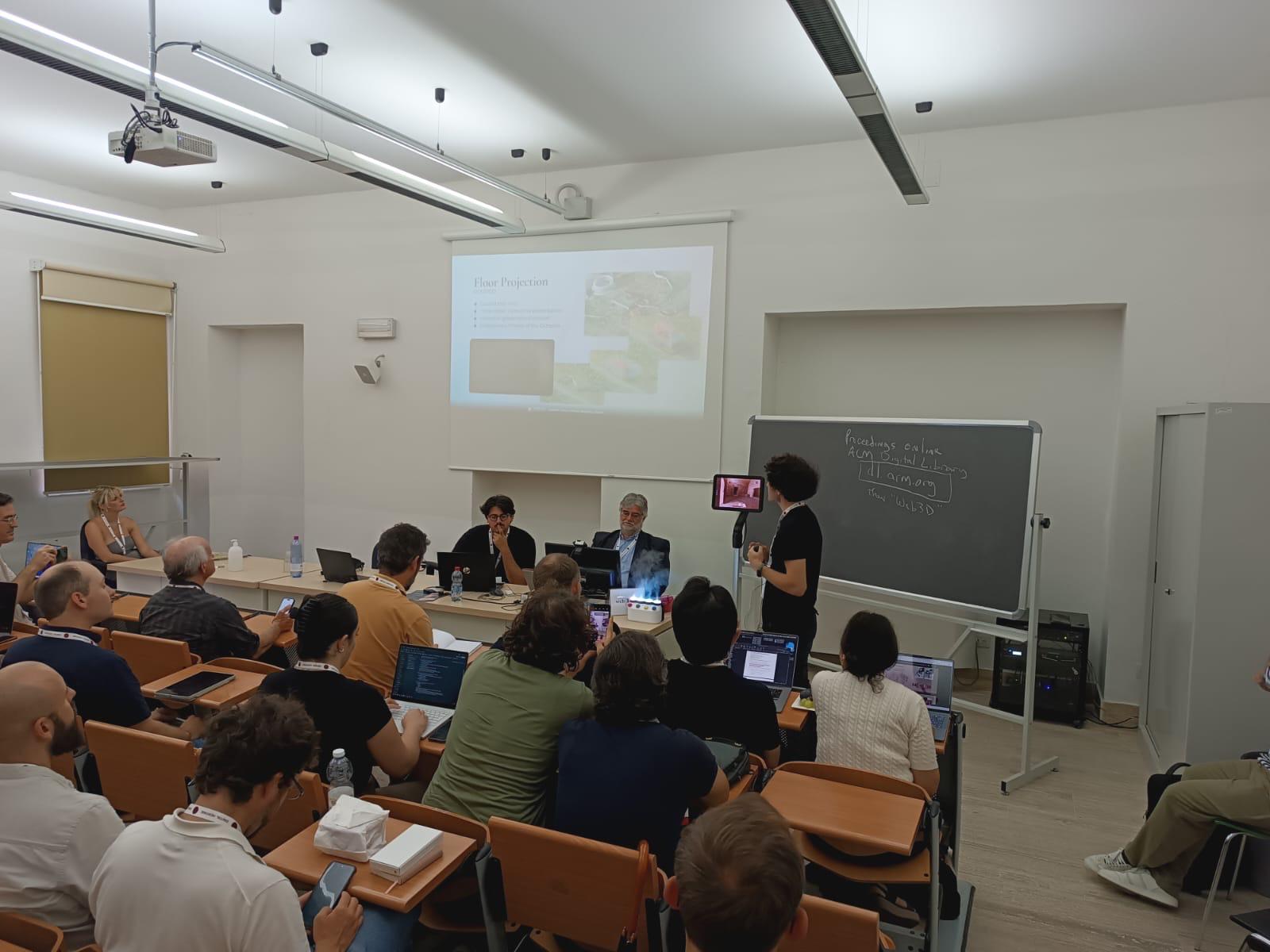
On 9–10 September 2025, HERIT ADAPT partner Sapienza DR participated in the Web3D 2025 Conference to present the co-authored paper “Digitally Rebuilding the Past: Using XR, Photogrammetry, and 3D Printing to Interpret Roman Heritage.”
The conference, co-located with Digital Heritage 2025, brought together global experts to explore the latest advances in interactive 3D technologies and digital heritage. Under the theme “Digital Legacies and Immersive Futures,” the event highlighted the integration of virtual and augmented reality tools to enhance learning, collaboration, and the preservation of cultural heritage.
The presented study examines how technologies such as Extended Reality (XR), photogrammetry, 3D graphics, and 3D printing can improve visitor engagement, increase accessibility, and support the sustainable management of heritage sites. Focusing on a case study in Rome, the research demonstrates how digital tools can help revitalise lesser-known cultural spaces, even where physical remains are limited.
This work, partially supported by the HERIT ADAPT project, highlights the growing role of innovative digital solutions in reinterpreting and promoting cultural heritage for wider and more inclusive audiences.
Link to the paper here